

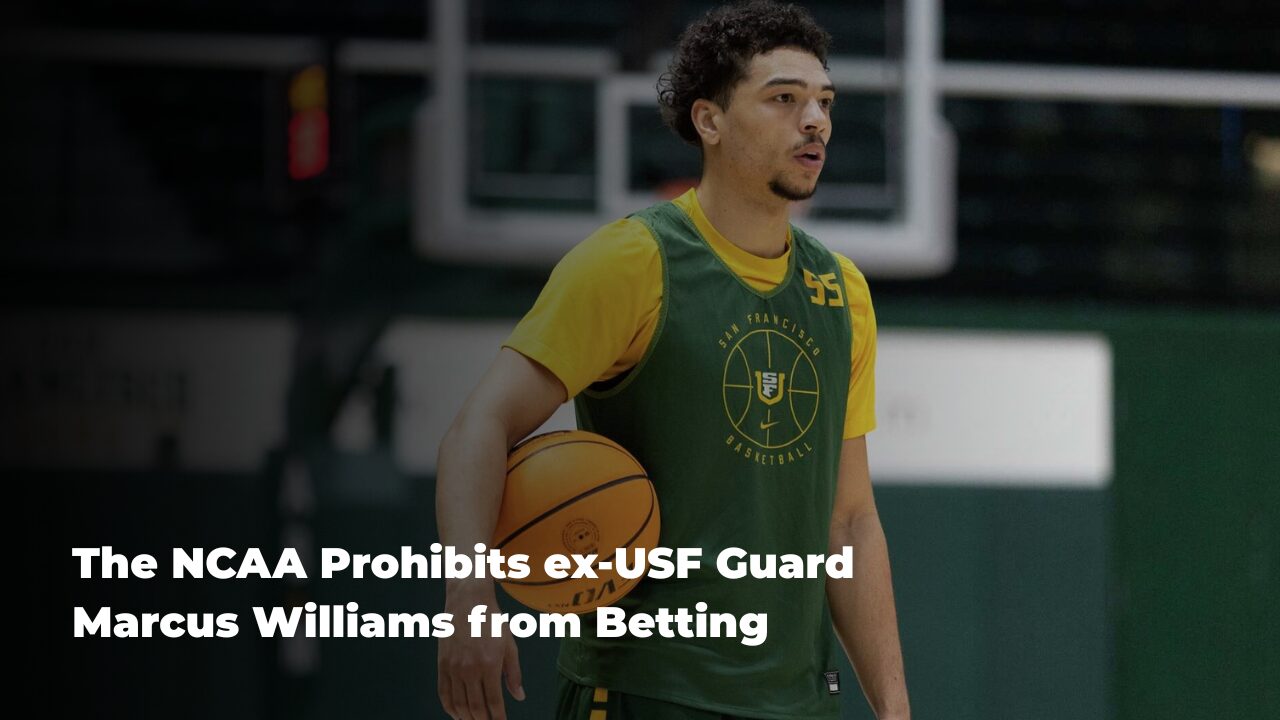
The NCAA declared former University of San Francisco basketball player Marcus Williams permanently ineligible following the discovery of sports betting violations. Investigators found multiple infractions, including inside information sharing and false statement provision during the inquiry. National concerns about betting-related misconduct in college sport deepen with this case development. The NCAA’s recent decision maintains its long-standing ban on sports wagering for all student-athletes and athletics staff.
The NCAA Committee on Infractions approved a negotiated resolution after an investigation revealed Williams knowingly shared performance-related information. A men’s basketball student-athlete from another school received this information from Williams. The resolution states that the other athlete used information for daily fantasy sports platform wagers. Williams’ game outputs became the basis for these betting activities.
Case Reveals Shocking Details
November 2024 to January 2025 investigations uncovered that Williams communicated with Fresno State’s Mykell Robinson nine times. Williams directed Robinson to take over specific performance metrics during these exchanges. A separate infractions case involving Robinson led to misconduct discovery through phone records. Repeated exchanges about Williams’ games appeared in Robinson’s communication history. Daily fantasy sports account denial came from Williams despite the email address and name setup evidence. NCAA’s infractions process determined he intentionally gave inaccurate or misleading information during the investigation. An additional penalty applies for providing false information according to NCAA regulations.
Current rules state that student-athletes wagering on their own games risk permanent NCAA eligibility revocation. Insider information provision carries the same permanent eligibility loss until an NCAA member school reinstates it. The Committee on Infractions verifies violations took place rather than imposing sanctions in these situations. Settlement validation with the institution occurs through an arranged agreement confirmation process.
NCAA Withdraws Professional Sports Betting Permission Plan
Weeks before the Williams case, the NCAA reversed a controversial proposal allowing student-athletes to engage in professional sports betting. Athletics department staff would have gained legal betting rights under the rejected proposal. Division I schools voted over two-thirds majority to overturn the change after a mandatory 30-day review. Betting ban remains intact across Divisions I, II, and III following member vote. 22 October approval scheduled original rule implementation for 1 November, before the delay to 22 November. Member schools utilised a seldom-used challenge procedure against the proposed betting rule change. Division I governance required 75 per cent approval, which the change failed to obtain. An invalid status resulted from insufficient support within the required voting threshold.
Integrity Concerns Shape Policy Choices
US sports gambling scandals create growing unease reflected in the rollback decision. October law enforcement operation resulted in NBA coach and player arrests, including Miami’s Terry Rozier. Portland coach Chauncey Billups faced ties to alleged illegal betting and poker activities. A major operation exposed widespread gambling issues across professional basketball. Baseball experienced similar turmoil with Cleveland Guardians pitchers Emmanuel Clase and Luis Ortiz’ indictments. Betting investigation prompted renewed debate over oversight and athlete vulnerability concerns. Professional sports face increasing scrutiny regarding gambling-related misconduct patterns.
College sports suffered particularly severe impacts from betting violations recently discovered. Six men’s basketball players lost NCAA eligibility for betting violations this year. Former Temple guard Hysier Miller received sanctions for placing dozens of wagers on his own team. Twelve additional NCAA betting cases remain under active review nationwide currently. Athletics directors warned that loosening restrictions could expose student-athletes to match-fixing risks repeatedly. Compliance officials echoed concerns about manipulation and the possibility of sensitive information misuse. The Williams case sharply underscores these warnings about gambling exposure dangers.
SEC Opposition Changed the Voting Outcome
The Southeastern Conference (SEC) played a decisive role in eliminating the short-lived betting reform proposal. Commissioner Greg Sankey urged the NCAA to preserve long-standing guardrails protecting college athletics. The proposal risked eroding the integrity of college competitions, according to Sankey’s assessment. “If there are legal or practical concerns about the prior policy, those should be addressed through careful refinement, not through wholesale removal of the guardrails,” Sankey wrote. NCAA President Charlie Baker received this direct communication from SEC leadership. SEC presidents and chancellors unanimously opposed the change, calling it “a major step in the wrong direction.” Conference unity demonstrated strong institutional resistance to gambling policy relaxation.
The Current Environment Is Recognised, and the Prohibition Continues
Policy update intended to reflect widespread legal sports betting realities when first approved. Over 100,000 coaches, athletes, and administrators completed responsible gambling training with EPIC Global Solutions. NCAA Sport Science Institute continues expanding mental-health and anti-addiction guidance programs. Regulated professional-sports wagering could reduce stigma and increase transparency, supporters argued. A decisive vote demonstrates institutions believe strict separation from the gambling industry remains essential currently. Gambling industry distance preservation takes priority over modernisation attempts for now.
Explore more:
 Share
Share


 203 views








 Analysis
  Blog
Blog  Business
  Companies
  Crime
Crime  Finance
  M&A
M&A  Regulation
  Reports