







Key Points
- US commercial gaming revenue rose 8.6% year-on-year in July 2026, with sports betting handle surging 31.9% to $11.60 billion on the back of the FIFA World Cup knockout rounds.
- iGaming crossed $1 billion for the month, but with no new states entering the market, the AGA openly acknowledges growth is steadily moderating.
- The AGA estimates prediction market platforms have cost state governments $1.5 billion in potential gaming tax revenue since the start of 2025.
The World Cup Rescued a Five-Month Flatline
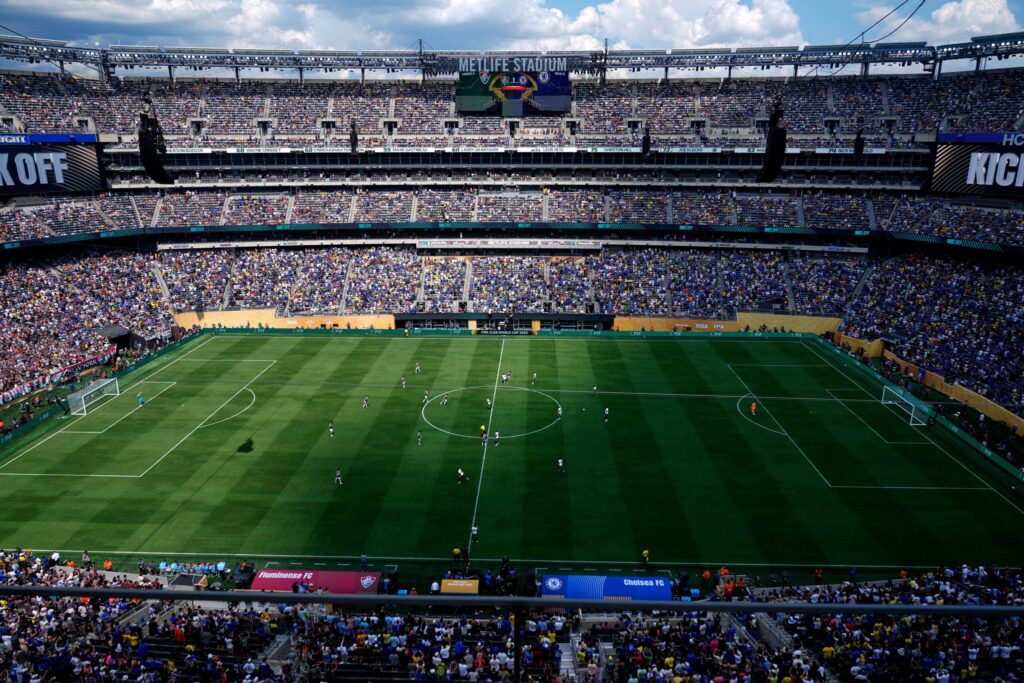
It was termed “months of near-zero handle growth dating back to December of last year.” However, the FIFA World Cup changed the entire scenario in two consecutive months. June witnessed a 26% increase in the total handle from the previous year during the group stage betting, resulting in increased volume, but operators faced low hold due to the initial victory of the U.S. men’s team in favour of bettors. July’s knockout rounds resulted in better commercial performance by the operators owing to high wins for the sportsbook, after the exit of the U.S. men’s team from the competition.
The July 2026 Commercial Gaming Revenue Tracker by the American Gaming Association showed that total US commercial gaming revenue grew by 8.6% year-over-year. The increase was driven by sports betting, which saw an increase of 27% to $1.27 billion in revenue and 31.9% to $11.60 billion in handle. This continued from 2025 when the US recorded $78.72 billion in commercial gaming, a year-over-year growth of 9.2%.
The AGA’s framing of July carried a qualifier that the headline figure does not show. “Despite a less favourable hold than in July 2025, the World Cup provided a significant boost in handle and revenue following months of near-zero handle growth dating back to December of last year,” the association said. Operators moved significantly more money in July but converted a smaller share of it into revenue than in the same month last year. Volume recovered; margin efficiency was a more mixed picture.
Massachusetts and Pennsylvania Count What the Tournament Delivered
Data from the states lend colour to the national statistic. The report released by the Massachusetts Gaming Commission for July 2026 showed that the sportsbooks created a handle amounting to $592.6 million, higher than $485.9 million recorded in July 2025. The accrual win amounted to $67 million, an increase of 36.2%, while the taxable gaming revenue was $65.56 million. In total, for the two World Cup months, Massachusetts operators created a gross revenue of over $122 million from betting of $1.2 billion, giving the state revenue of $24 million.
The state of Pennsylvania had a similar story due to how the knockout rounds turned out. For July 2026, the report by the Pennsylvania Gaming Control Board showed that sportsbooks handled $509.5 million in bets, which was an increase of 23.5% compared to July 2025. A 12.7% hold yielded $64.8 million as gross revenue, and taxable sports-wagering revenue stood at $51.8 million. FanDuel had the highest hold percentage of 15.3% out of the $165.7 million in bets placed.
Illinois also recorded a handle and revenue spike in July tied to the knockout rounds. The state had seen handle volumes decline through the spring months, a period that followed the introduction of a progressive tax structure with rates reaching 40%. The July tournament rebound interrupted that trend, though the broader relationship between Illinois’s tax environment and long-term volume is a separate and continuing debate.
Land-Based Casinos Hold a Consistent Line
Traditional casino gaming, which is the largest revenue driver in the American commercial gambling industry, posted revenues of $4.48 billion in July, reflecting a 3.1% year-over-year increase. Table games saw the strongest increase, with revenues going up by 6.2% to $876.8 million. Slot machine revenues rose by 0.9% to reach $3.25 billion.
The Nevada Gaming Control Board report for July 2026 provided precise figures for the stability shown by the sector. The total gaming win in the state for that month was $1.387 billion, reflecting a 2.07% increase over July 2025. On the Las Vegas Strip, the gaming revenues increased by 3.64% to stand at $776.3 million, while those in downtown Las Vegas declined by 8.64% to $68.4 million. Nevada took in $98.46 million as percentage fees in August from revenues earned in July, reflecting an increase of 3.44% compared to the previous year.
iGaming Crosses $1 Billion Again, but the Growth Story Is Changing
iGaming generated $1.01 billion in July, up 15.7% from $877.9 million in July 2025. The AGA named the directional shift plainly. “Showing signs of natural maturation with no new markets coming online, iGaming growth continues to steadily moderate,” the association said.
Smaller markets are now producing the faster percentage gains. West Virginia led all seven states with 56.5% year-on-year growth through July, while Delaware rose 52.5%. New Jersey set a monthly revenue record in July at $276.9 million, narrowly edging the mark it had set in May. Maine is expected to become the eighth live iGaming market once its operators complete their regulatory launch requirements, adding one more state before the existing pool approaches saturation.
$1.42 Billion in Taxes, and the Revenue That Is Not Reaching States
Regulated gaming contributed $1.42 billion in state gaming tax revenue during July, up 7.7% year-on-year, with specific allocations varying by jurisdiction.
The AGA placed that figure alongside a warning it has escalated throughout the year. Prediction market platforms, sweepstakes casinos, and skill machines operate outside state gaming frameworks. According to the association, these platforms have cost state governments an estimated $1.5 billion in potential gaming tax revenue since the beginning of 2025. AGA President and CEO Bill Miller held his consistent position: “Sports betting belongs under state and tribal regulation. That’s how consumers are protected and how communities share in the benefits.”
Expert Analysis: Tournament Dependency Is the Unspoken Problem in US Sports Betting
We think the number that matters most in July 2026 is five, not 8.6%. Five months of near-zero handle growth preceded the World Cup’s effect across both June and July, in a market now legally operating across 39 states and Washington D.C., following a record 2025. A legal framework covering most of the country still needed an international football tournament to restore momentum across two consecutive months. That is not structural growth; it is borrowed timing.
Our read on the prediction market fight is that the AGA’s estimate of $1.5 billion in potential gaming tax losses is harder to act on than the association’s language implies. Kalshi, Polymarket, and similar platforms have built user bases among people who genuinely do not see themselves as sports bettors, and the question of CFTC jurisdiction over sports event contracts remains an open federal-versus-state dispute. Separately, Senate Bill 302 in Massachusetts proposes raising the online sports-wagering tax to 51%, currently referred to the Senate Ways and Means Committee and not yet enacted. If passed in any form close to that rate, the reduction in operator promotional capacity would push price-sensitive bettors closer to the very platforms the AGA is working to restrict. The NFL season will sustain the autumn revenue cycle regardless; the more revealing test is what next spring looks like once the tournament calendar goes quiet.
Explore more:
 Share
Share


 6 views