

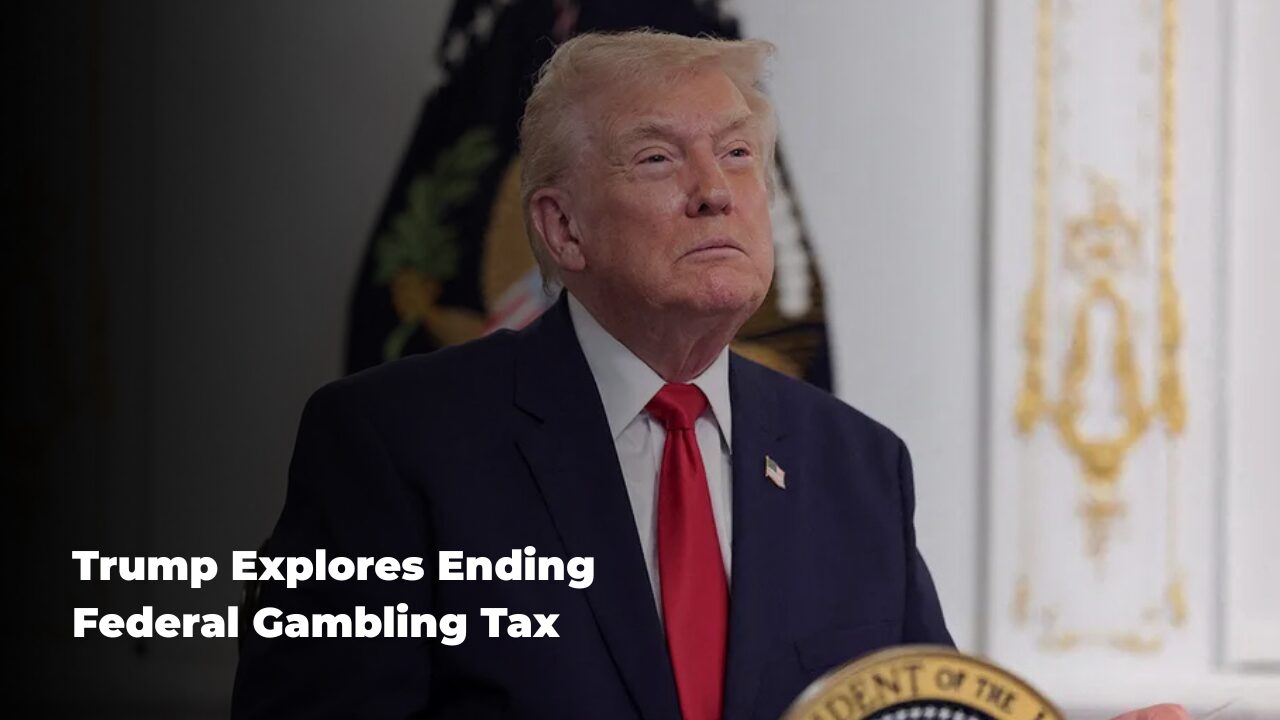
Donald Trump indicated on Tuesday, December 9, that federal taxes on gambling winnings might end. The president discussed this possibility while speaking to reporters. His administration continues to reduce taxes on various income types after cutting taxes on tips and overtime. Fox Business reported Trump’s Air Force One comments to journalists. The president said he remains open to eliminating federal gambling tax requirements. Trump explained his current tax cuts include tips, Social Security, and overtime. He needs more time to consider the removal of the tax on gambling winnings.
Recent Legislation Reduced Taxes on Tips and Overtime
The One Big Beautiful Bill Act (OBBBA) became law several months earlier. This legislation eliminated taxes on tips and overtime pay. American workers now keep more of their earnings through these provisions. American Gaming Association data shows nearly 60 per cent of adults gambled within the past year. Physical casinos attracted 30 per cent of adults during this period. Sports betting engaged 21 per cent of the population. The proposed change affects numerous Americans.
IRS Regulations Define the Current Gambling Tax Structure
The president stated Tuesday that he will consider modifying gambling taxation rules. Current IRS regulations mandate W-2G forms for winnings exceeding $600. The government withholds 24 per cent from gambling prizes of $5,000 or higher. Lotteries, raffles, horse races, and casinos follow these requirements. Prizes over $5,000 trigger 28 per cent federal withholding rates. Missing Social Security numbers increase withholding to 31 per cent. Form 1040 must include all gambling income for tax purposes. Loss deductions cannot surpass annual gambling winnings totals. October 2025 brought massive attention to gambling taxes in Nevada. A casino patron won more than $1 million playing a $3 “Wheel of Fortune” slot.
Tax Changes Would Impact Numerous American Gamblers
Physical casino visits occurred among 30 per cent of participants. Sports betting attracted 21 per cent during the same timeframe. Tax policy modifications would influence millions of recreational players and winners. Gaming industry taxation creates ongoing complications throughout the United States. Online gambling expansion brings new challenges for iGaming operators. States implementing online gambling establish unique tax structures and compliance demands. Tax law standardisation does not exist across jurisdictions. Individual states determine their specific regulatory frameworks. European centralised taxation contrasts with America’s decentralised approach. States set varying tax rates and fee structures independently. Revenue reporting requirements differ between each state jurisdiction.
Join the world’s biggest iGaming community with SiGMA’s Top 10 News countdown. Subscribe HERE for weekly updates, insider insights, and exclusive subscriber-only offers.
Explore more:
 Share
Share


 314 views








 Analysis
  Blog
Blog  Business
  Companies
  Crime
Crime  Finance
  M&A
M&A  Regulation
  Reports