





Key Points
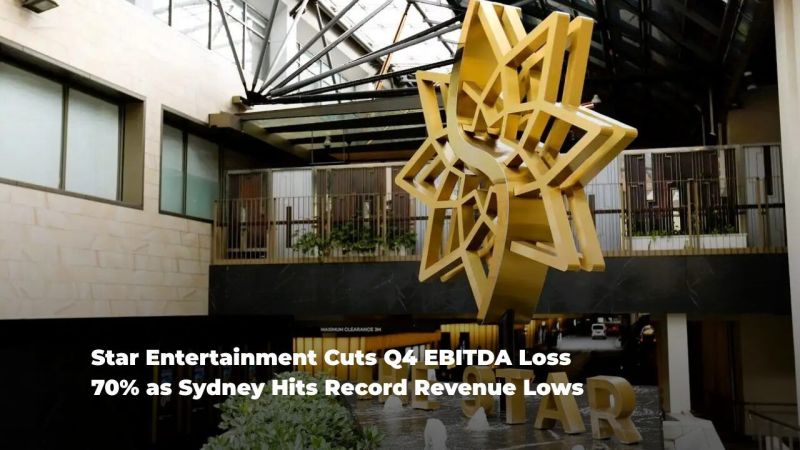
- The EBITDA loss of Star Entertainment’s Q4 FY26 was reduced by 70% to A$8 million, but revenue of Sydney casino still stands at 20% lower than pre-reform levels owing to mandated carded play and the cap of A$5,000 per day on cash transactions.
- Gold Coast reported a 51% increase in EBITDA for the property to A$22 million.
- Despite having A$267 million in cash post-refinancing, concerns of going-concern remain.
Sydney Stuck at the Bottom, Cost Cuts Carry the Quarter
The Star Entertainment Group registered an EBITDA loss of only $8 million in the three months to June 30, 2026, reflecting a marked improvement of 70% from the loss of $27 million made in the same period one year ago. The company’s revenue remained constant at $265 million. But read past the headline: the narrowed loss came almost entirely from cost reduction, not from any meaningful recovery in trading.
Operating expenses fell 11% year-on-year to A$206 million, reflecting more than A$200 million in annualised cost savings accumulated since September 2024. Volumes at the flagship Sydney casino remained, in the company’s own words, “at historical lows.” That tension, between a shrinking cost base and a still-broken top line, defines where Star actually stands right now.
The Sydney Problem: A Reform-Driven Revenue Floor
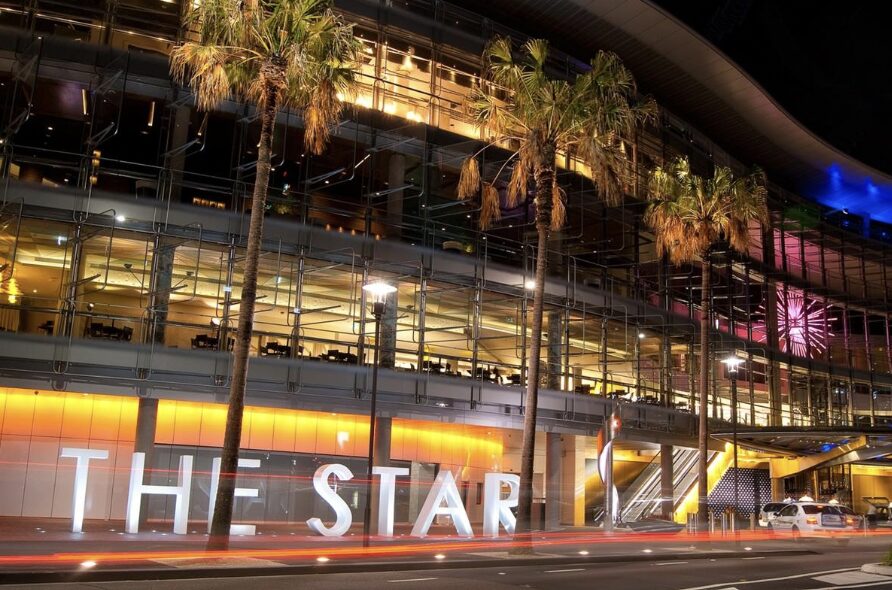
Star Sydney pulled in A$150 million during Q4, up 2% on the March quarter but still 7% below the same three months last year. Property EBITDA at the site dropped 35% year-on-year to A$10 million, and after corporate cost allocations, the Sydney segment recorded an EBITDA loss of A$10 million for the quarter.
With the introduction of mandatory carded play and a daily cash limit of A$5,000 by the New South Wales regulatory authorities since 19 October 2024 on the gambling floors, Star Sydney has seen its daily revenues decline by 20% relative to its performance prior to these measures. Growth from electronic gaming machines partially offset those declines, but not enough to reverse the trajectory.
The NSW Government has confirmed the A$5,000 daily cash limit will remain in place until at least August 2027, per reporting from Michael West Media. That removes any near-term expectation of a regulatory tailwind for Sydney. The casino’s licence also remains suspended, with NICC-appointed manager Nicolas Weeks continuing in the role until at least 30 September 2026.
Adding to the regulatory weight, the NSW Independent Casino Commission handed Star Sydney A$10 million in fines in June 2026 across four disciplinary matters, covering breaches including allowing patrons to gamble without required breaks, improper reward point conversions, and self-exclusion system failures. The NICC also issued an enforceable undertaking requiring a further A$5 million investment in financial crime risk management technology. Breaches spanned December 2018 to September 2025, predating the current leadership.
Group CEO Bruce Mathieson Jnr responded directly: “We take our obligations to abide by gaming regulations seriously and appreciate that the NICC has allowed us to pay these penalties progressively up until 30 June 2027 while we continue to invest in our technology uplift. These events occurred between December 2018 and September 2025 and prior to the commencement of the current leadership. We will continue to engage constructively with the NICC in respect of The Star Sydney as we work through our remediation program. I am confident that we are making progress.”
Gold Coast Lifts While Brisbane Steps Back
While Sydney flatlines, the Gold Coast told a different story. Revenue at Star Gold Coast climbed 12% year-on-year to A$107 million, with gaming revenue jumping 21% on higher volumes across both table games and electronic gaming machines. Property EBITDA surged 51% to A$22 million. After corporate allocations, the Gold Coast segment generated A$13 million in EBITDA for the quarter, compared with just A$2 million in the same period a year earlier.
The Gold Coast is now carrying the group. Its structural advantage is clear: Queensland has not yet fully implemented the same mandatory carded play regime that has strangled Sydney volumes, giving the property room to operate under less restrictive conditions.
Brisbane, by contrast, pulled back sharply. Revenue fell to A$5 million from A$15 million in the prior quarter, reflecting the completion of Stage One of Star’s exit from the Destination Brisbane Consortium (DBC). In April, the company transferred its 50% equity stake in Queen’s Wharf Brisbane to joint venture partners Chow Tai Fook Enterprises and Far East Consortium International, releasing its parent company guarantee over A$1.4 billion in DBC debt in the process.
Under the revised Casino Management Agreement, Star now receives a fixed annual operator fee of A$18 million paid monthly, alongside performance-based incentive components, pending regulatory approval. During Q4, it received A$4.5 million under the interim arrangement. The Brisbane segment recorded an EBITDA loss of A$12 million after corporate allocations. Stage Two of the transaction, covering the Destination Gold Coast Consortium and remaining Brisbane assets, is expected to complete during the second half of 2026 and no later than 31 March 2027.
WhiteHawk Refinancing Doubles the Cash Position
The most consequential development of Q4 was not on the P&L. On 7 May 2026, Star completed a US$390 million secured term loan with WhiteHawk Capital Partners, maturing in May 2029, replacing existing debt facilities. The refinancing increased available liquidity by approximately A$130 million net of the interest reserve account required under the facility.
The balance in cash and cash equivalents as at 30 June 2026 was A$267 million, which is almost double the balance of A$120 million at the end of Q3. Positive cash flow from operations of A$31.8 million was realised during the quarter due to the realisation of Brisbane operator fees and tax refunds of A$18.1 million from the ATO. For context, operating cash flow for the full financial year remained negative at A$101.1 million.
The path to refinancing was not straightforward. As reported by Reuters in February 2026, Star had been required to secure a refinancing commitment letter by 31 March and execute the deal by 15 May 2026 to avoid default under its existing loan terms. The WhiteHawk deal closed one week inside that deadline. Marc Jocum, senior product and investment strategist at Global X ETFs, had noted at the time of the H1 FY26 results: “Star Entertainment’s revenue softness tells a more cautious story as gaming revenue continues to decline, Sydney’s flagship property is still loss-making, and the company’s immediate survival seems to hinge on completing a refinancing deal rather than the strength of its own earnings.”
That framing still applies. The balance sheet is more stable now; the income statement is not fixed.
Going-Concern Status: Progress, But No Guarantee
Star has been direct about what remains unresolved. The company acknowledged its ability to continue as a going concern depends on resolving a limited number of material uncertainties, some of which remain outside its control. It offered no assurance that all issues would be resolved before audited FY26 financial statements are filed.
Star has been including the going concern disclosures in its quarterly reports since the regulatory crisis intensified in the wake of the 2022 Bell Inquiry, which found that the casino operator was not suitable to hold a gambling license and was fined A$100 million. In 2024, a second Bell Inquiry found further failings, resulting in an additional fine of A$15 million. The A$10 million June 2026 fine brings documented recent penalties beyond A$25 million, excluding remediation and management costs.
The company has separately settled its long-running tax disputes with the Australian Taxation Office over historical GST and withholding tax treatment of payments to junket operators. That removes one source of uncertainty. Star also confirmed ongoing engagement with regulators in both New South Wales and Queensland as it pursues licence restoration across its properties.
Expert Analysis: The Cost Story Has Limits
Star’s recovery narrative rests almost entirely on cost reduction. The operator has removed more than A$200 million in annualised costs since September 2024, a genuine operational achievement for a business under this level of pressure. Gold Coast EBITDA expanding 51% shows the platform has commercial potential when volume cooperates.
But Sydney is not recovering; it is stabilising at a structurally lower level. The 20% decline in average daily revenue since mandatory carded play took effect is not a cyclical dip, it reflects a permanent reset in the regulated operating environment at NSW’s second major casino. With the cash limit locked at A$5,000 until August 2027 at the earliest, and licence suspension still in place, there is no identifiable catalyst for a Sydney rebound within the next 12 months.
The Gold Coast ascending while Sydney contracts also reshapes the group’s geographic risk profile. It reduces concentration in a single market, but it also means the operator’s largest and most profitable asset by brand recognition is now its weakest by revenue trend. Star’s full-year FY26 audited results, expected in the coming weeks, will tell the complete story, including whether the going-concern language survives or softens when independent auditors review the books.
Explore more:
 Share
Share


 176 views