

Key Points
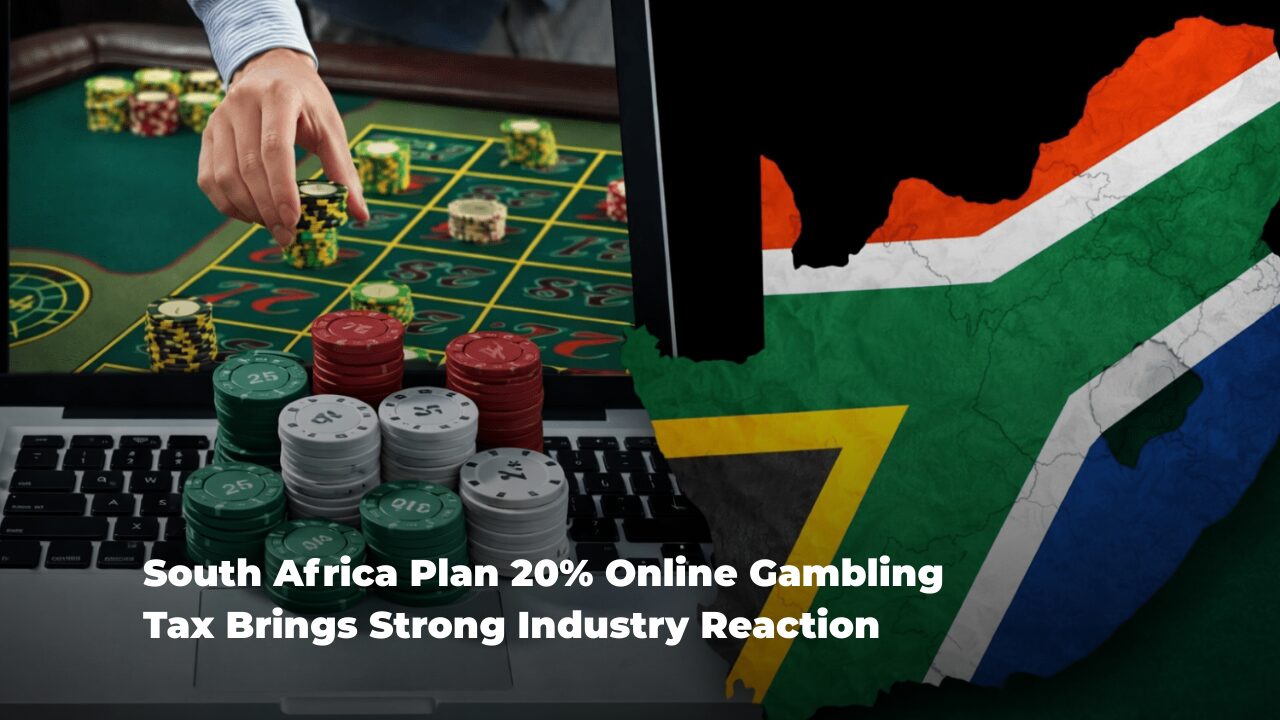
- The South African government plans a 20% national tax on gross gambling revenue from online betting operators, showing a push to reduce online gambling and respond to social harm.
- Industry voices explain that this levy with VAT and provincial taxes can raise the total effective tax load on licensed bookmakers close to 38–39%.
- Critics raise worry that the rule can move gamblers toward offshore platforms which hold a near 62% share of the online gambling market.
The South African government is now reviewing a proposal for a 20% national tax on gross gambling revenue of online betting operators, causing reaction from industry groups and policy organisations. Many industry stakeholders express concern and show unease because they believe this measure can place heavy pressure on licensed bookmakers. Some policy groups also share the worry that the proposal may not stop illegal gambling activity even if it increases financial load on regulated operators. Officials first introduced the proposal in November 2025, presenting the idea as a step to reduce online gambling and respond to social harm linked with betting. The government plan would place a 20% levy on gross gambling revenue from online betting and interactive gambling activities across national level. Authorities also explain that licensed operators already pay provincial gambling taxes, so the proposed measure would stand in addition to those payments.
The National Treasury discussion paper said a sharp rise in online gambling and its social effects pushed the government toward this proposal. The paper also explains that the purpose of reform does not mainly focus on raising extra revenue for state funds. Instead officials say the main goal aims to discourage problem gambling behaviour and reduce damage linked with pathological betting patterns. Authorities mention that several jurisdictions already impose online gambling taxes above 20%, giving support for the selected tax rate. The Treasury schedule indicated that the originally scheduled deadline to close the public comments on the proposal was 30 January 2026. Subsequently, the consultation window was extended by the latter officials up until 27 February 2026 to allow additional submissions by the stakeholders. The government plan also entails a post-consultation phase having a workshop with the stakeholders to allow room for more discussions. After that stage authorities will prepare a revised proposal and place it into draft legislation for public comment later during the year.
Christopher Axelson, deputy director general for tax and financial sector policy at the National Treasury, shared a view on expected revenue flow. He stated revenue from the proposed tax will not go into special programmes but instead move into the national revenue fund. Axelson explained that this flow could lower pressure on other tax sources and possibly stop increases in other taxes later. He also described a proposal with a spirit similar to the sin tax model used in several policy systems. The government’s intention under this approach targets company revenue from gambling services rather than applying tax directly on gamblers. Axelson also shared the view that lower online gambling activity would still create positive social outcomes even if tax income falls. He argued that the outcome could still support development goals and social spending plans across government sectors. Revenue collected through this tax could support spending areas such as education, healthcare, and policing. Axelson further explained that strong revenue generation might lower pressure on other tax bases in future years. In such a scenario the government might avoid increases in personal income tax, offering relief across wider taxpayer groups.
Industry Says Current Taxes Already Put Strong Pressure on Operators
Industry representatives argue that the proposal hides the real tax weight already carried by licensed bookmakers across the current regulatory system. Sean Coleman, chief executive officer of the South African Bookmakers Association, explained that the headline 20% figure gives a wrong picture of the actual burden. He said bookmakers already face several taxes within the present framework, which increases financial strain across licensed betting businesses. Licensed operators now pay provincial gambling tax of 6.5% on gross profit to provincial licensing authorities or gambling boards. Under the current system gambling transactions also count as VAT-able supply, which means 15% value-added tax sits inside betting stakes. Bookmakers then transfer that VAT portion to the national government as part of the tax structure attached to gambling activity. Coleman explained that operators may deduct VAT on some business expenses such as rent and other operational payments.
These deductions reduce the final VAT amount that bookmakers actually send to the government under the system. Association analysis shows that effective VAT payment often stands close to around 11% to 12% of total revenue. When analysts combine this VAT figure with the existing 6.5% provincial gambling tax, operators already pay nearly 18% before any new levy arrives. Adding the proposed 20% national tax would push the total effective burden close to roughly 38% or 39% of gross gambling revenue. Coleman expressed frustration because he believes the analysis supporting the tax ignored the effect of VAT on licensed betting companies. He warned that the combined tax level could exceed rates seen across many other jurisdictions worldwide. Such pressure may leave the South African betting sector among the most taxed gambling industries across global markets. Coleman also explained that many countries used for comparison apply online gambling taxes without extra levies such as VAT.
In the international sample mentioned in the discussion paper, twenty-two out of fifty jurisdictions do not place VAT on gambling transactions. Information on VAT treatment also remained unclear across another twenty-four jurisdictions included in the sample list. Coleman pointed out that only one jurisdiction from the sample clearly applies VAT on gambling activity. Three additional jurisdictions may charge VAT depending on the nature of a gambling transaction under their systems. Because of this difference he argued that the comparison between South Africa’s combined taxes and other jurisdictions becomes misleading. Industry stakeholders now warn that additional tax could threaten the survival of bookmakers operating under narrow profit margins. Coleman said the extra levy may act as a final blow for some companies already struggling inside the regulated market. He explained that such financial pressure may become impossible to sustain for operators working under existing compliance rules.
Critics Fear Proposal Could Expand Illegal Gambling Activity
The counter-argument is also raised by critics that the proposal is likely to escalate the rise of illegal internet gambling in South Africa. Coleman cautioned that the increase in taxes would drive consumers to offshore gambling networks that are not regulated by the national authorities. According to industry statistics, there are 2,884 illegal operators today who are targeting gamblers in South Africa by means of offshore online services. The majority of these companies are foreign to the country and licensed under the jurisdictions of the Philippines, Malta and Curaçao. Because these companies remain outside South Africa’s jurisdiction they do not pay local gambling taxes or follow national regulations. Under the National Gambling Act participation by South African citizens on offshore betting websites remains illegal. Coleman said research from late 2024 estimated that illegal operators control around 62% of the total online gambling market.
He added that more than R50 billion in gambling revenue now moves offshore toward unlicensed betting platforms. The industry participants are worried that the increased pressure on the licensed operators in terms of taxes will push part of the betting to the offshore locations. This transition may compromise the controlled market and make the existing legislative controls on gambling less efficient. Coleman encouraged the government to pay attention to the enforcement mechanisms that would lock out the illegal operators which would supply the South African consumers. He argued that authorities should strengthen compliance action rather than raise taxes on businesses already following regulations. Coleman also proposed the creation of a special task team including regulators, industry members, the communications regulator, and national gambling authorities. This group would coordinate actions designed to combat illegal gambling activity targeting South African players. Industry association also works with regulators to run consumer awareness campaigns explaining how gamblers can recognise legal betting platforms.
Consumers may verify website legality by checking the bottom section of the homepage for a South African gambling board licence number. Coleman also warned that winnings obtained from illegal websites may face confiscation under current legislation. The National Gambling Board holds the authority to seize funds transferred through the banking system linked to illegal gambling activity. Industry representatives now cooperate with banks in an effort to block payments from illegal operators reaching local consumers. Coleman said enforcement efforts aimed at shutting illegal markets should receive priority before the government introduces further taxation measures. Policy organisations have also raised questions regarding the proposed tax framework. Ayanda Zulu, policy officer at the Free Market Foundation, said the organisation does not support the Treasury plan. Zulu explained that the proposal would add a national tax on industry already paying strong provincial levies.
He remarked that online gambling activity in South Africa is within a legal grey area. This is the case since the National Gambling Amendment Act of 2008 was not implemented to the fullest extent. Because of this gap online casinos continue operating without a clear legal status or defined regulatory structure. Zulu argued that the Treasury proposal assumes these casinos can face taxation despite the absence of enforcement infrastructure. He warned that such a policy may place pressure on legal operators while offshore casinos continue dominating the market. YieldSec data referenced by Zulu indicates that offshore online casinos account for around 62% of online gambling activity. Consumers using these unregulated platforms often lack protection in cases of fraud or dispute. Zulu said policymakers should first resolve the legal status of online casinos before creating a taxation structure.
Industry Experts Warn Proposed Gambling Tax Could Harm Regulated Market
He believes the government must establish a clear regulatory framework before any fiscal policy discussion begins. Only after that stage should authorities consider taxation design for the sector. Zulu warned that early taxation measures may overwhelm licensed operators already paying provincial gambling taxes. The Free Market Foundation therefore asked authorities to withdraw the proposal due to enforcement and fairness concerns. Some critics also question the absence of dedicated funding for gambling addiction programmes within the tax proposal. Stakeholders ask why measures designed to reduce problem gambling do not allocate revenue directly toward harm reduction efforts. Alexis van Eeghem, candidate attorney at HJW Attorneys and Conveyancers, raised regulatory questions linked with the proposal. He noted that gambling regulation in South Africa mainly sits under provincial authority structures. Provincial gambling boards license operators and collect taxes under a framework created by the National Gambling Act.
Van Eeghem explained that the lack of a promulgated National Gambling Amendment Act keeps online gambling partly illegal. This situation also weakens enforcement ability across the online gambling environment. Because of this gap proposal to introduce a national tax raises questions regarding enforcement and implementation. Industry observers warn that the new tax may weaken the competitiveness of licensed operators within the regulated market. They fear higher tax costs may push gamblers toward offshore platforms outside South Africa’s regulatory system. Wendy Rosenberg, head of digital media and electronic communications at Werksmans Attorneys, discussed the impact of the proposed tax. She explained that operators rather than gamblers would carry the tax burden under the proposal. Since gamblers would not directly feel the tax cost, Rosenberg believes betting behaviour may not decline. She added that the combined effect of provincial gaming taxes, VAT, and national tax could place South Africa among the highest taxed betting markets.
Operators also carry additional financial obligations such as contributions to the South African Responsible Gambling Programme. Industry stakeholders say another levy may destabilise the regulated betting sector and reduce total tax collection over time. Despite criticism the government continues to state that the proposal could generate significant revenue while discouraging harmful gambling behaviour. Treasury estimates suggest the tax could raise close to ten billion South African rand during a fiscal year. South Africa’s gambling market has seen a big surge in recent years. In the 2024–2025 financial year, gamblers put down about 1.5 trillion rand, according to the National Gambling Board. That’s a jump of 31.3% from the year before. Betting made up nearly three-quarters of all that action. Casinos contributed close to 19.5% of the total gambling amount recorded.
Online Gambling Dominates South Africa’s Betting Market Growth
Limited payout machines represented around 3.6% of wagers across the market. Bingo activity accounted for roughly 1.8% of the total wagers recorded. Enterprises offering bookmaker and online gambling services raked in a staggering R152.6 billion last year, according to the latest stats from Statistics South Africa. That’s a 72% leap over the previous five years a truly eye-watering jump. Gross gambling revenue smashed through the R74.5 billion mark, with a 25.6% increase from the year before. And with 34.316 people now working in the gambling sector by 2024, the industry’s growth has really taken off. Experts point to the COVID-19 pandemic as a turning point that really put the pedal to the metal for the industry’s growth. Share of online gambling activity increased from around 64% during 2020. By 2025 that share had grown to between 82% and 83% of gambling activity.
The growth of internet access across South Africa also supported this expansion of online gambling participation. The number of people with internet access rose from around 36.5 million during 2020. By 2025 this figure reached close to about 50 million users. Stakeholders now say the outcome of the tax proposal will depend on the consultation process and legislative action. The National Treasury has not yet taken a final decision on the implementation of the 20% tax on gross gambling revenue.
Explore more:
 Share
Share


 55 views







 Analysis
  Blog
Blog  Business
  Companies
  Crime
Crime  Finance
  M&A
M&A  Regulation
  Reports