

Key Points
- ReferOn launched Evolution Cohort so teams can analyse player value, retention, and monetisation across lifecycle stages with a stronger understanding of behaviour patterns.
- The feature tracks cohorts using registration dates or first-time deposit moments while organising activity through daily, weekly, or monthly time buckets.
- Evolution Cohort stands as the first step inside a roadmap that expands behavioural and performance cohort analytics across the ReferOn platform.
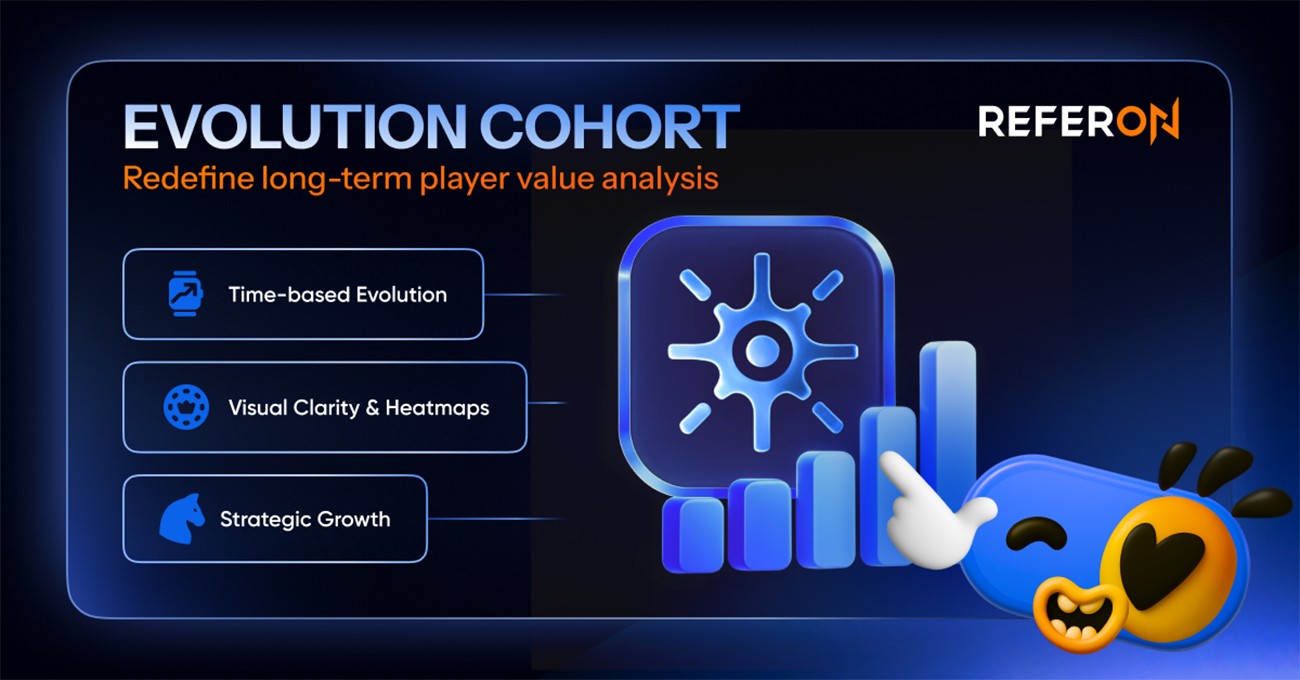
ReferOn released an analytics feature named Evolution Cohort which introduces a framework helping operators and affiliate teams observe how player value grows across time. This system presents a structured time view of player value, retention, and monetisation patterns drawn from affiliate performance information. Through the Evolution Cohort, ReferOn attempts to shift the interpretation of affiliate performance information away from static snapshots toward lifecycle performance tracking. Instead of reading results from a single reporting period, the system studies how groups of players perform across their lifecycle after joining platforms.
Such lifecycle observation lets operators watch cohorts after registration or first-time deposit events while engagement patterns gradually reveal direction. Teams then notice moments when player value rises, levels, or begins losing strength during different stages of engagement. Evolution Cohort now operates inside the Dynamic Reports module within ReferOn and signals the first milestone inside a roadmap expanding cohort intelligence. The release also begins a wider effort that aims to deliver deeper cohort analysis functions across the entire ReferOn ecosystem.
Moving from Static Reports Toward Lifecycle Performance Insight
Evolution Cohort introduces a model where performance cohorts behave like evolving performance curves rather than frozen collections of reporting numbers. Instead of showing metrics taken from narrow reporting windows, the tool examines how performance moves across the full lifecycle of each player. Many reporting tools normally show outcomes only from activities that happen during defined reporting windows within platforms. Evolution Cohort chooses another path by revealing how player performance progresses across time after registration or first-time deposits occur.
Operators analysing lifecycle patterns can notice behaviour signals that aggregated reports often hide inside large data groups. Teams discover cohorts creating early revenue bursts, cohorts delivering stable long-term value, and cohorts losing engagement sooner than expected.
The system also helps affiliate managers identify the moment when player groups reach peak performance and when participation begins to drop. This deeper awareness allows organisations to follow the full performance journey of players who arrive through various affiliate partners. Users track cohort performance through either player registration dates or first-time deposit dates which serve as reference entry points. Those reference moments group players based on the time they joined the platform or completed their first financial transaction. After defining cohorts, the system measures value development using time buckets configured as daily, weekly, or monthly reporting intervals. Such time-bucket tracking lets teams follow behaviour signals while players move through different lifecycle stages.
The reporting interface displays two visualisation formats which present identical datasets through separate analytical views. Users shift between heatmap tables and lifecycle chart displays without stopping the reporting workflow inside the platform. Heatmap tables reveal changes or deviations appearing in performance patterns across multiple time intervals. Lifecycle charts show cohort trajectories clearly so teams can compare how different player groups develop during the same period. This visual approach reduces the difficulty normally linked with large spreadsheet exports and manual analysis tasks. Because lifecycle trends appear directly within the reporting system, teams avoid external exports and formula calculations.
Metrics Supporting Affiliate and Financial Evaluation
Evolution Cohort supports many metrics used inside affiliate marketing and iGaming performance analysis environments. Operators therefore observe multiple sides of player behaviour and financial outcomes through a single reporting interface. Deposits and net cash indicators measure financial transactions generated by players within each analysed cohort group. The framework also includes total reward metrics which track incentive distribution connected with player activity. Evolution Cohort records the number of first-time deposits occurring within each analysed player cohort. This FTD count helps teams judge how efficiently affiliates convert player registrations into initial deposits.
Operators also gain visibility into the count of active customers belonging to each cohort during different lifecycle periods. In addition, teams examine the number of depositing customers who continue making financial transactions after joining platforms. CPA count metrics strengthen affiliate analysis by measuring acquisition activity connected with cost-per-acquisition agreements. The framework also calculates average deposit values which provide another financial signal when assessing cohort performance. These indicators together allow different departments to examine player activity through several operational viewpoints. Affiliate managers, finance teams, and product analysts all interpret the same dataset using metrics linked to their roles.
The framework also contains filtering logic enabling segmentation across multiple operational structures. Users filter performance information using company structure, brand identity, affiliate relationships, or defined CPA periods. Through this segmentation capability, organisations ensure analysis remains meaningful for different departments and operational priorities. Finance teams focus on financial indicators while affiliate managers and product analysts study behaviour and marketing signals. Isolating companies, brands, affiliates, or campaign periods helps organisations produce insights from complex datasets. Filtering tools keep performance trends visible even while teams analyse wide affiliate networks. Evolution Cohort also reduces the noise often present in conventional reporting environments.
Rather than forcing teams through aggregated tables, the system highlights lifecycle trends through visual comparison structures. Heatmap displays reveal deviations between cohorts across time periods with quick visual recognition. Lifecycle charts then present the same dataset visually so operators can compare engagement movement across player groups.
Evolution Cohort Begins ReferOn Cohort Intelligence Roadmap
The Evolution Cohort release forms part of ReferOn’s development roadmap focused on expanding cohort intelligence capabilities. The current version concentrates on lifecycle analysis driven by time progression as a foundation for later functionality. The roadmap states the platform will introduce another cohort analysis mode during future product updates. Later versions aim to expand analysis toward behavioural and performance-driven cohort models. These future additions will build upon the time structure introduced through the current Evolution Cohort release. Operators will eventually examine player value not only through time progression but also through behaviour and performance signals. The product development team considers Evolution Cohort the first stage of a strategy expanding analytics capability across ReferOn.
That strategy centres on understanding how player value develops after acquisition occurs through affiliate channels. A product executive from the company explained that many affiliate platforms deliver large volumes of raw data without interpretation tools. Users in those environments often process information manually through spreadsheets or external analytics systems. During a statement describing the Evolution Cohort, the executive expressed that the detective work era in affiliate reporting approaches an end. The statement explained that many platforms simply deliver data dumps which force users to investigate results themselves. According to the executive, Evolution Cohort interprets business momentum rather than presenting historical metrics alone. The product team states that the tool focuses on revealing how player value shifts through time instead of summarising past activity.
The executive also clarified that the platform does not exist only for reporting historical performance results. Instead, the framework aims to help affiliate teams anticipate value patterns emerging from lifecycle analysis. The statement warned that affiliate managers without real-time visibility into player value development may depend on assumptions. Such assumptions may create costly decisions when teams evaluate affiliate performance or marketing investment. Evolution Cohort currently operates for ReferOn clients inside the Dynamic Reports module of the platform. This release marks the first operational deployment of ReferOn’s cohort intelligence roadmap.
Explore more:
 Share
Share


 53 views








 Analysis
  Blog
Blog  Business
  Companies
  Crime
Crime  Finance
  M&A
M&A  Regulation
  Reports