

Key Points
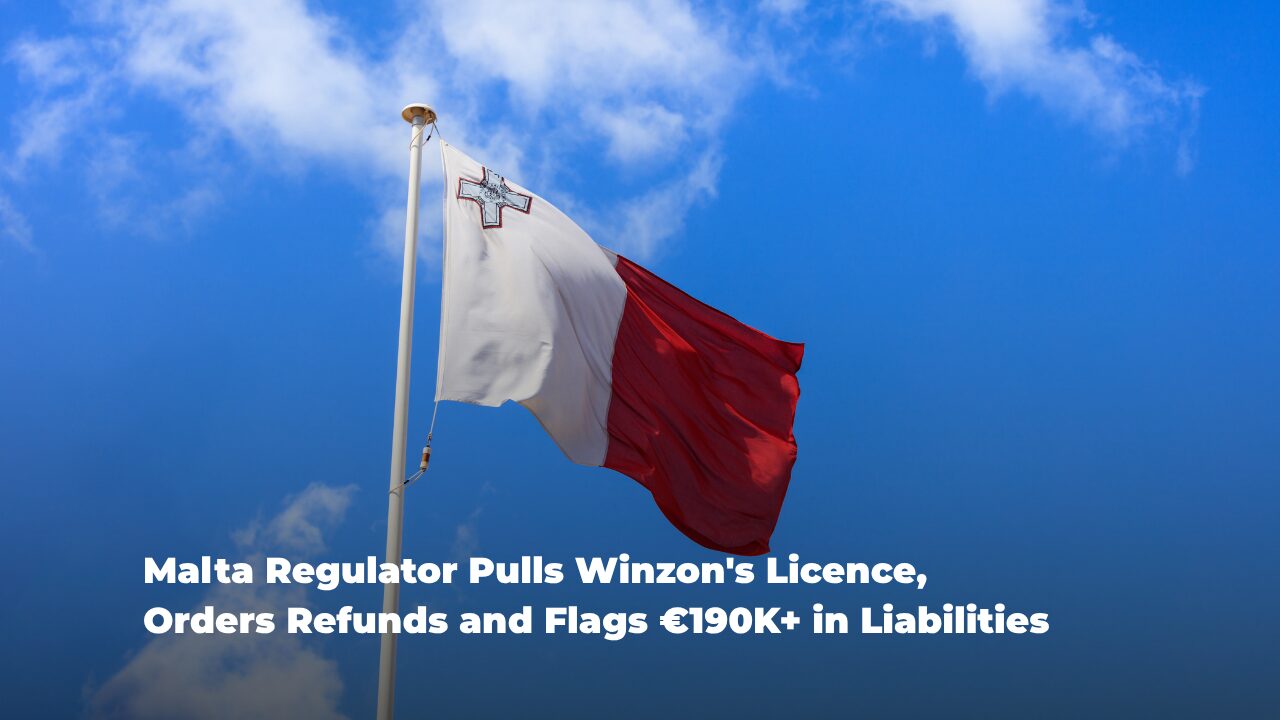
- Malta Gaming Authority removed the Winzon Group licence with effect from March 11, 2026 after repeated compliance failures raised pressure.
- Winzon must repay all player balances, inform users directly, and provide verified proof for each payment made.
- Unpaid fees as well as penalties above €190,000 remain, and further enforcement may happen if obligations stay unmet.
Many people assume regulation gives online gaming a layer of protection that holds firm. Once a company holds a licence, it feels like oversight and stability follow. That assumption breaks quietly here. The Malta Gaming Authority (MGA) has cancelled the operating licence of Winzon Group Limited and will not be renewed. The decision applied retroactively from March 11, 2026, even though formal publication came on April 7. That gap signals something unsettling: for weeks, the company operated without a valid licence while still appearing active in parts of the market. For anyone using such platforms, one question becomes hard to ignore what protection remains once the licence disappears?
Regulatory Breakdown: Why the MGA Took Action
The cancellation falls under regulation 10(2)(b) of Malta’s Gaming Compliance and Enforcement Regulations a provision regulators invoke when operators fail to meet required standards. Authorities did not point to one isolated violation. They cited “numerous shortcomings” and broader compliance failures under the Gaming Act and related regulatory instruments. That phrasing carries weight. It points to systemic failure, not a one-off mistake. In practical terms, the regulator concluded the operator could no longer handle player funds responsibly, operate with transparency, or comply with Maltese law. Winzon Group Limited corporate reference C-89900, licence MGA/B2C/717/2019 reportedly operated dozens of iGaming sites. Some have already closed. Others, including Comix Casino, stayed active and continued displaying MGA licensing claims even after revocation. That gap between regulatory status and public presentation is exactly what regulators work to prevent because it strikes directly at user trust.
Immediate Orders: Protecting Players Comes First
Once a licence is revoked, the focus shifts fast from enforcement to damage control. The MGA’s instructions reflect that priority without hesitation. Winzon must notify all players through email and on-site notices, which must stay visible for 30 days. This is not a paperwork exercise. It protects passive users who do not track regulatory news from operating under false assumptions about the platform’s status. More critically, the company must return all player funds. Refunds must go to verified account holders under Maltese gaming law specifically Chapter 583 of the Laws of Malta. The obligation goes beyond a basic payout instruction. Winzon must provide documented evidence, including:
- System-generated transaction records.
- Corresponding bank documentation.
That documentation requirement removes ambiguity entirely. Regulators can verify not just intent, but whether payments actually occurred. Players can expect more than a promise they can expect something traceable.
Data, Branding, and the Risk of Misleading Signals
The revocation leaves a trail of ongoing responsibilities. Winzon must continue managing user data in line with its existing privacy policy and applicable data protection law. It must also clearly communicate to users how their personal data will be handled after the licence ends. This addresses a risk that rarely draws attention. When companies lose licences or shut down operations, data handling tends to become unclear. The MGA forces transparency at precisely the moment when it most easily slips away. A separate instruction targets branding. Winzon must remove every reference to MGA authorisation from its platforms and materials. A licence badge is not merely a design element it signals legitimacy. Leaving it in place after revocation gives users a false sense of security, particularly those who do not check regulatory registers themselves.
The Financial Pressure: More Than Just a Fine
The financial consequences of this enforcement action are substantial. Winzon must settle €46,693.23 in outstanding regulatory fees, covering annual licence costs and minimum compliance contributions. Administrative penalties add another €147,080. Together, the liability exceeds €190,000. Numbers alone do not tell everything. The structure of these obligations reveals more. Fees represent money the company already owed to remain operational. Penalties represent the cost of failing to meet regulatory standards. The MGA has made one thing clear revocation does not wipe out these liabilities. If Winzon fails to pay, authorities retain the power to pursue further legal action to recover the amounts owed.
A Company That Still Appears, But No Longer Exists in Regulatory Terms
One of the more disorienting aspects of this case involves the company’s fragmented presence. Winzon reportedly listed winzon.com as its official site, yet the page appears inactive with no substantive archived content available. Contact attempts through the listed channels have produced no response. Meanwhile, at least one associated platform continues to present MGA licensing claims. The contrast between legal reality and visible appearance creates real risk. From a user’s perspective, the brand may still look regulated and functional. In legal terms, it is neither. That gap is exactly where exposure accumulates.
What This Means for Players and the Industry?
For players, the immediate concern is directly recovering funds and establishing whether a platform remains safe to use. The MGA’s structured response mandatory notifications, documented refunds, and enforced transparency work to reduce uncertainty where it matters most. The process still depends on the operator complying. That compliance is not guaranteed. For the broader industry, this case delivers a sharper reminder. Regulatory approval is not a fixed status it is conditional and subject to continuous review. When failures compound, enforcement can arrive fast, reach backwards, and carry financial consequences that do not disappear with the licence. Trust can erode just as fast. Once a licence badge comes down, it changes how users read every part of a platform from financial safety to data handling.
The Shift That Matters
What this case puts into focus is not the cancellation alone, but how many obligations survive it. A revoked operator must still pay fees and penalties. It must still refund players. It must still account for its conduct. That reality disrupts a common assumption that regulatory action draws a line under a company’s responsibilities. In practice, the action often marks the moment where those responsibilities become most exposed and most enforceable.
Explore more:
 Share
Share


 49 views






 Analysis
  Business
  Companies
  Crime
Crime  Finance
  M&A
M&A  Prediction Markets
  Regulation
  Reports