



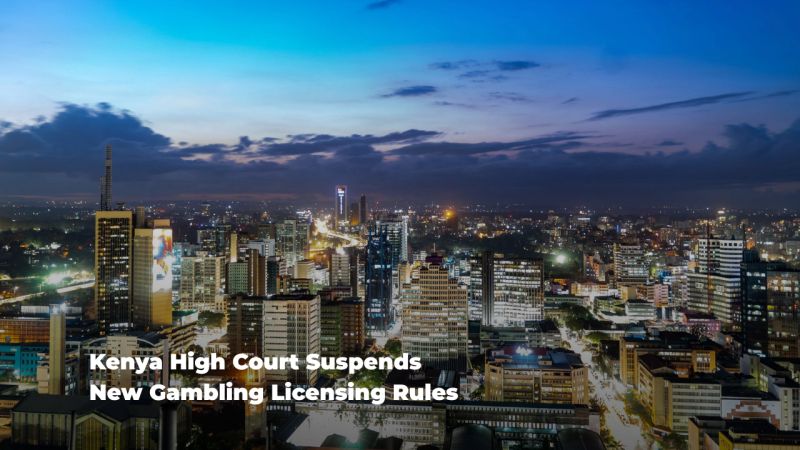
The High Court of Kenya has suspended implementation of the Gambling Control (Licensing) Regulations 2026 after issuing an interim stay order due to a legal challenge against the new licensing framework.
Justice William Musyoka signed the order after a case was filed by Thomas Buckley Opar Owuor and Ken Brance. Owuor previously served as business development director at SportPesa before establishing his Nairobi law firm.
Constitutional arguments focus on public participation and capital requirements
David Sarinke, a partner at McKay Advocates, said the ruling places Kenya’s licensed gambling market on hold because the regulations applied only to licensed operators. He explained that the challenge argues the final capital requirements were increased after the public consultation process, raising concerns under Article 10 of Kenya’s Constitution.
“As soon as you have filed a case to object to a law coming into operation, then the court normally gives you orders to stop any implementation, especially if your grounding is based on some constitutional principles,” Sarinke told iGB.
“The grounding is on a very key constitutional principle of public participation, which in my assessment is going to really affect the chances in terms of [the case] succeeding, because they’re saying that after publication there were other aspects added that were not subjected to public participation.”
Licensing uncertainty creates new challenges for operators and regulators
The suspended regulations formed part of Kenya’s wider gambling reforms introduced with the Gambling Control Act. These legislation replaced laws from 1966 and transferred oversight to the Gambling Regulatory Authority.
Sarinke described the ruling as a “big blow” because the new law is already in force but no licensing framework can currently operate.
“Really, this is a big blow, because the new law has already come into operation,” Sarinke continues. “Now we are lacking a licensing framework, and depending on how long it will take, it’s going to be a few more months to sort of move forward.”
Court timetable shifts attention to judicial review proceedings
Under the stay order, the applicants have 14 days to file their substantive judicial review motion. Their application argues the licensing regime should be struck down entirely.
The filing says numerous operators have questioned whether they can meet the higher financial requirements, warning about business closures and investment or tax revenue declines. Thousands of jobs are also viewed as at-risk.
Once the substantive motion is filed, the regulator, government and the Association of Gaming Operators Kenya will each have 14 days to submit their responses. The High Court has listed the matter for September 21 to issue directions on how the case will proceed.
However, the Gambling Regulatory Authority has not publicly commented on the ruling. Until the court decides otherwise, the interim stay is in force, preventing implementation of licensing regulations across the legal gambling market.
Expert Opinion
Kenya High Court has paused enforcement of the new licensing framework after a case was raised against some parts of its directives. This provides time to examine the legislation and make adjustments to improve perceived negative impacts. The stay order will remain in effect for 14 days.
Source: https://igamingbusiness.com/legal-compliance/legal/kenya-high-court-suspends-gambling-licensing-framework/
 Share
Share


 157 views