

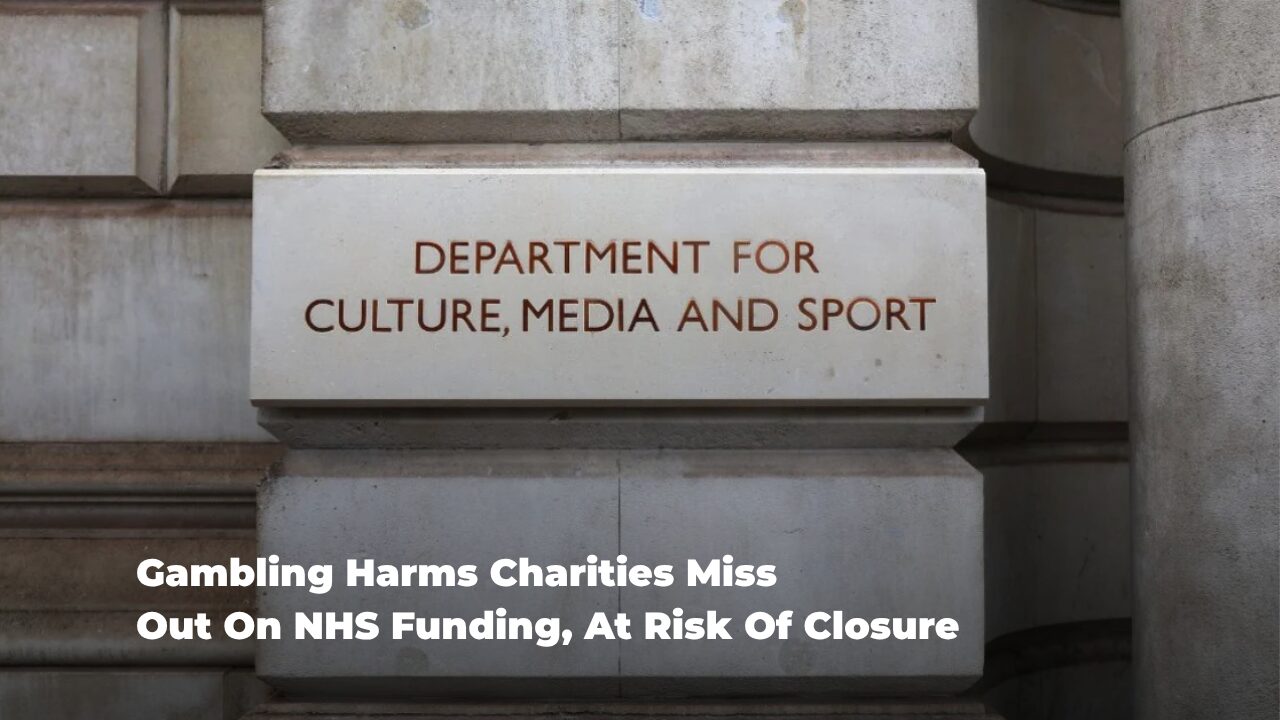
Several gambling harms charities might need to close after failing to secure treatment funding under the new NHS England framework. Funding decisions were issued late on Tuesday, just hours before the statutory levy came into effect on 1 April.
The new system introduces around £120m in mandatory operator contributions, allocated across research, prevention and treatment. These funds will be distributed across three bodies: UKRI oversees research, the Office for Health Improvement and Disparities handles prevention, and NHS is responsible for treatment.
The treatment funding decisions follow similar outcomes in prevention funding, where several long-standing charities were also excluded.
Late decisions leave charities with limited options
The timing of the announcements has drawn criticism from within the sector. Decisions were confirmed shortly before the 1 April deadline, leaving affected organisations with little time to respond.
Jordan Lea, CEO of Deal Me Out, criticised the process. He said: “It was completely disorganised and unprofessional and put service users at risk. That’s not a good start to the system and not a good sign of things to come. It’s just mind blowing.”
While several well-known charities were unsuccessful in their applications, others secured funding. The full list of successful applicants has not yet been publicly detailed.
To manage the transition, the government introduced a short-term stabilisation fund for unsuccessful applicants, providing up to three months support.
Some charities are considering returning to direct industry funding, although there are doubts about how viable that path will be under the new framework. One sector source suggested: “It might even be in their [operator] interests if some charities closed down.”
Service gaps and referral uncertainty emerge
Unsuccessful applicants have raised concerns about immediate service delivery. Without clarity on which organisations will operate under the new system, charities are unsure where to direct individuals seeking help.
One source described the challenge of managing urgent cases without a clear referral network. They said: “My concern today is for those people ringing. What do you do with these people who are at crisis end? And it is an awful thing to say ‘we can’t help you, go somewhere else’ – without actually knowing what that looks like.”
Another added: “We don’t know who to signpost to… I felt quite deflated when the news came in at five to five yesterday.”
Treatment services rely on coordinated pathways, especially for individuals experiencing acute gambling-related harm. Disrupting the network creates immediate pressure on remaining providers.
The closure of GambleAware, which previously coordinated national efforts, has added to the uncertainty.
Questions raised over strategy and system design
Beyond immediate funding outcomes, stakeholders are questioning the structure of the new system.
Matthew Hickey, former Gordon Moody chief executive, commented: “I can’t see how it’s working strategically, to be honest. You look at it all at face value and ask the question, what are they commissioning against?”
He acknowledged that GambleAware had limitations but noted that it operated with a clearer national structure involving regional and national providers.
Hickey added: “Well, now you look at it and you go, what do they actually want? What do they actually need? What is the requirement out there?
“You look at the NICE guidelines that have been produced and the process that went through and that kind of sets the parameter of it, but where’s the strategy that people are commissioning against or commissioning for?”
Explore more:
 Share
Share


 8 views







 Analysis
  Business
  Companies
  Crime
Crime  Finance
  M&A
M&A  Prediction Markets
  Regulation
  Reports