

Main Points
- FIFA signs its first prediction market deal with ADI Predictstreet in a multi-year agreement.
- The platform will launch before the 2026 World Cup and let fans predict match results and tournament events.
- Integrity systems, blockchain setup, and approvals support the plan.
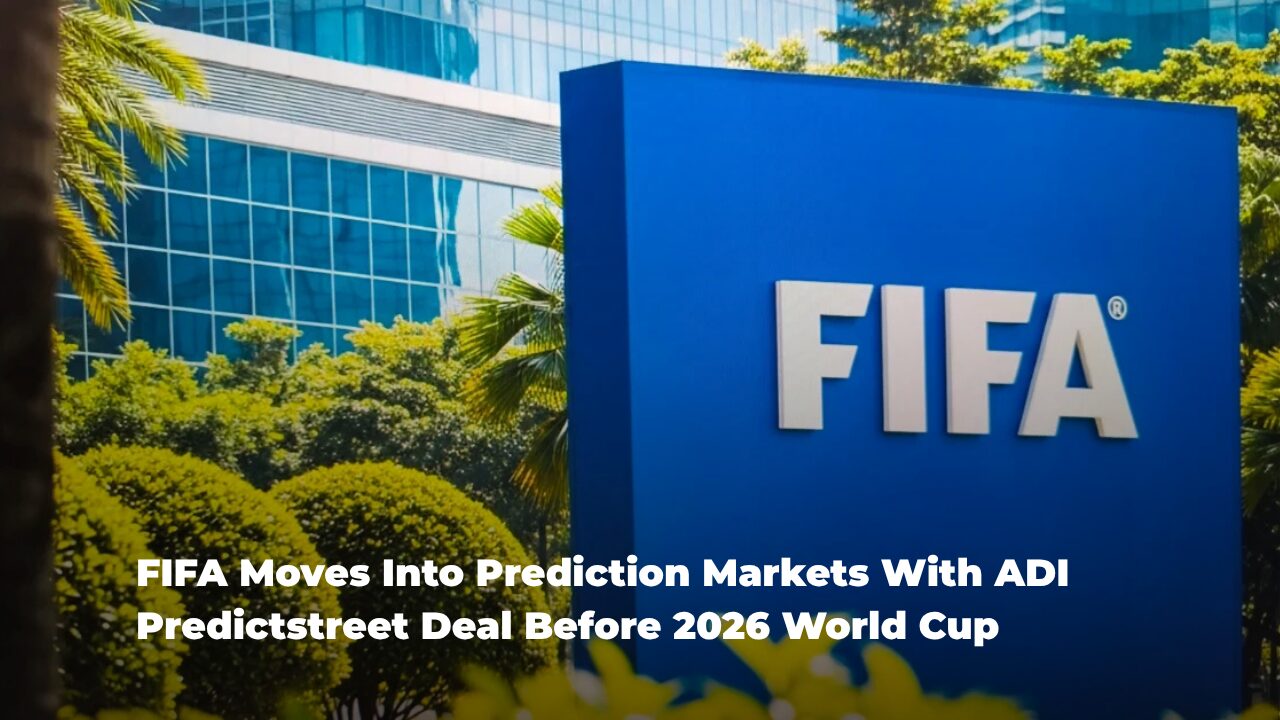
Fans mostly think engagement upgrades mean better streaming or more data on screen. Interaction itself keeps evolving it moves from watching to forecasting and that part gets little attention. FIFA’s latest deal draws this line without apology: fans stop being spectators and start reading outcomes in a real way. Structure now backs that shift up firmly. FIFA agrees to a multi-year deal with ADI Predictstreet, giving the company the title of first-ever official partner in the prediction market category. The World Cup 2026 marks its public start, and the deal runs well past that, pushing FIFA into a digital engagement space that keeps growing.
The Partnership: What Actually Changes for Fans
The agreement places an interactive forecasting layer over the global football’s main stage at its core. ADI Predictstreet’s platform lets fans go beyond match results and dig into tournament statistics, standout players, and key moments. Nobody calls this casual guessing. FIFA’s official historical data will feed directly into the platform so users can base their predictions on something real rather than instinct. That distinction transforms the whole thing from entertainment into something that feels close to analytical participation. The same system powers FIFA’s free-to-play bracket challenge, giving fans a space to map the tournament’s path, go up against others, and update predictions as events move along. In effect, it creates a loop: watch → analyse → predict → re-engage.
FIFA President Gianni Infantino ties this deal into a bigger picture, saying: “FIFA is all about taking the fan experience to the next level and getting on board with new ideas that bring supporters that much closer to the action.” And he adds: “By teaming up with FIFA, ADI Predictstreet is bringing a fresh way for die-hard football fans around the world to get closer to the game, using a mix of insider knowledge and hands-on interaction to really deepen their connection with our competitions.”
Scale Matters: Why the 2026 World Cup Is the Launchpad
FIFA chose this moment for the rollout with real intent behind it. The FIFA World Cup 2026 runs across the United States, Canada, and Mexico, and it carries more teams, more matches, and more host cities than any edition before it, 48 teams, 104 matches, 16 cities. FIFA puts the expected audience at close to six billion people across all forms of engagement. Numbers like that reshape what Predictstreet can actually become. It stops being a niche product and turns into a participation layer embedded inside a world-scale event. ADI Predictstreet puts this goal into plain words, saying the deal lets it “leverage the global stage of the FIFA World Cup 2026 to introduce interactive forecasting to billions of football fans worldwide.” Ajay Hans Raj Bhatia, Principal Council Member of ADI Predictstreet, described the shape of things to come: “This partnership marks a defining moment for ADI Predictstreet and how audiences engage with major events, as we lay the foundation for a new category where collective intelligence, technology and real-world outcomes converge.”
The Technology Backbone: Blockchain and Accessibility
A technical system built for scale and transparency sits behind the whole experience. ADI’s sovereign, institutional-grade blockchain runs the platform and handles real-time processing along with interactions that users can verify. Mobile and desktop applications give the platform reach across devices, keeping access open to users everywhere. Football gets the first focus, but the roadmap already points toward finance, technology, and global events beyond sport. That wider goal lines up with ADI’s core mission: placing one billion users inside blockchain ecosystems by 2030, with early work directed at Asia and Africa.
Regulatory Green Light and Rapid Approval
ADI Predictstreet hit a major regulatory point just before the partnership went public. Gibraltar granted its prediction market operator licence faster than usual, a decision driven by urgency and clear economic stakes. Nigel Feetham, Gibraltar’s Minister for Justice, Trade and Industry, spoke to parliament about the speed, saying it proved “the pace at which we must sometimes act to safeguard Gibraltar’s vital economic interests.” With a 9 April live date set, the platform gets a head start before World Cup interest builds to full force.
Integrity Concerns: Addressing the Risks Head-On
Questions about insider trading and market manipulation follow prediction markets wherever they go. FIFA’s stance here shows it knows those risks exist rather than pretending they do not. The partnership carries a full integrity monitoring framework that tracks suspicious trading in real time, keeps reporting systems in place, and shares information across the right channels. Transparency, fairness, and participant protection all sit inside that framework by design. Beyond that, FIFA confirms every Predictstreet-related activity will run inside its existing regulatory and integrity frameworks. Lining those two things up together shows clearly that governance will not give way to growth.
A Growing Trend Across Global Sports
This move by FIFA belongs to a wider pattern in professional sport. Partnerships between leagues and prediction market platforms keep coming at a steady pace. The National Hockey League made history in October 2025 as the first major U.S. league to step into this area through deals with Kalshi and Polymarket. Major League Soccer joined in January 2026 with a Polymarket deal of its own. What this shows is that leagues approach structured forecasting as engagement infrastructure rather than gambling. That framing shapes everything about how regulators treat these platforms, how they get marketed, and how fans pick them up.
What This Really Signals?
This deal points to something bigger than one platform entering the market. The way global audiences connect with live events is changing at a fundamental level. Fans no longer just take in results they now step in to anticipate and interpret events together. That changes what the viewer-event relationship looks like. Engagement does not happen in isolated moments anymore; it runs continuously. Insight becomes part of what entertainment delivers. As the 2026 World Cup gets closer, the question will likely stop being whether fans predict outcomes and start being how deeply those predictions reshape the whole experience of watching the tournament.
Explore more:
 Share
Share


 9 views







 Analysis
  Business
  Companies
  Crime
Crime  Finance
  M&A
M&A  Prediction Markets
  Regulation
  Reports