





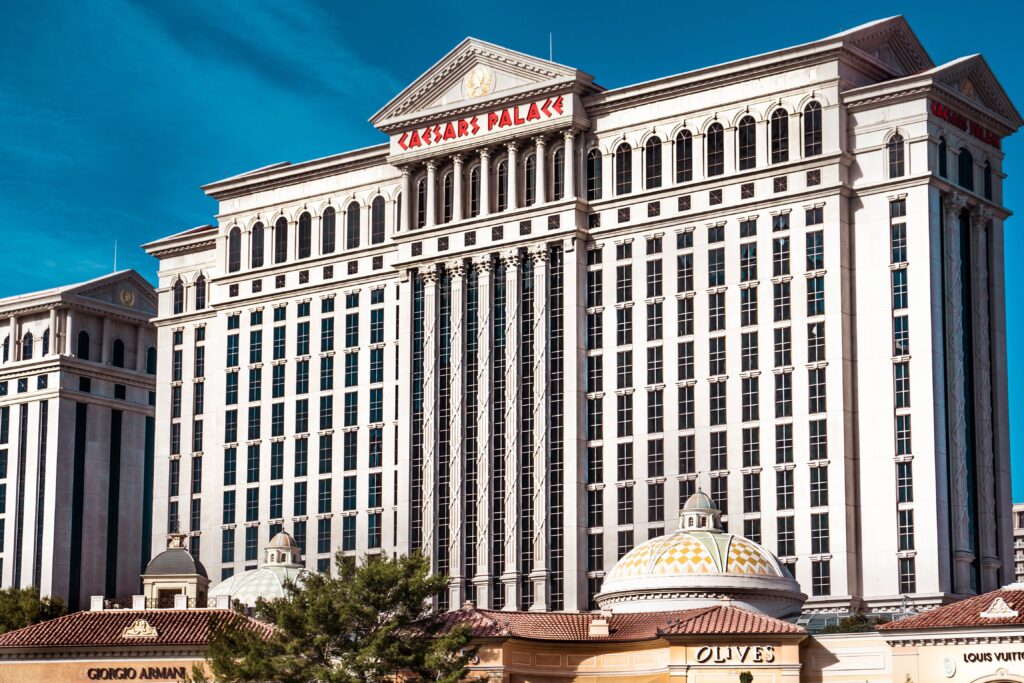
Key Points
- On 22nd September 2026, in Reno, there will be held a special shareholders’ meeting will be held to vote on an acquisition of Caesars by Fertitta Gaming Holdco worth $17.6 billion in cash.
- Shareholders who choose not to vote will vote against the merger, since this requires a majority of all 203.8 million outstanding shares, and not only the ones that vote.
- Antitrust filings with the FTC have been made on 13th July and 13th August 2026, while the HSR waiting period expires on 14th September, exactly 8 days before the shareholders’ vote.
The Vote Is Set, and Abstaining Is Not Neutral
In a conference room of the Eldorado Resort and Casino located in Reno, the fate of one of the biggest casino corporations in the country will be settled through proxy cards on 22 September 2026. The special meeting of the company’s shareholders is slated to be held at 9:00 AM Pacific Time by Caesars Entertainment Corporation.
Three proposals have been suggested to the shareholders which include voting on the merger agreement, executive compensation in relation to the merger agreement, and adjournment of the meeting due to additional votes. It is pertinent to highlight here that the merger will require the approval of a majority of outstanding shares. That distinction carries real weight. Per the definitive proxy statement filed with the SEC, as of the 21 August record date there were 203,780,124 shares outstanding entitled to vote, and abstentions count directly against the merger. Shareholders who do nothing are, in practice, voting no. Recreational Enterprises Inc., the Carano family vehicle, has already committed its 8.6 million shares, representing 4.2% of the outstanding total, in favour of the deal.
Eligible shares are convertible into cash amounting to $31.00 upon conclusion. In case the transaction does not get finalised by 26 June 2027, then Fertitta Gaming Holdco will be required to pay a ticking fee that amounts to $0.00715 per share per day starting on 1 July 2027 without any interest. The contract will run automatically until 27 November 2027 in case of pending regulatory approvals. Should Caesars withdraw, then it has to pay a termination fee of $200 million whereas Fertitta will have to pay $450 million in case it does not complete.
Nine Months of Bidding the Board Never Made Public
Most of the coverage regarded it as a deal made in May 2026. However, Caesars’ proxy filing to the SEC reveals that the process began much earlier than that in December 2025 and included other bids, a retracted offer, another chance to come back, and even a fourth mystery party that disappeared.
Carl Icahn already had an investment in Caesars in 2019, being one of the key people behind its acquisition for $17.3 billion by Eldorado Resorts. In May 2024, Icahn secretly acquired a second investment in the company, which resulted in a March 2025 agreement: two board positions in exchange for having a maximum of 5% ownership and no takeover attempts. In December 2025, Icahn asked for a restricted waiver to be able to negotiate officially, which was provided by Caesars on 3 December 2025.
Fertitta read the room immediately. On 19 December 2025, it notified Caesars of its awareness of Icahn’s interest and its intention to submit its own offer. Caesars entered into non-disclosure agreements with both parties. Icahn submitted a formal offer of $28.50 per share on 2 January 2026; Fertitta followed a week later with $28.75, backed by a Morgan Stanley commitment letter. Both were rejected.
By 5 February, Icahn had moved to $32 per share. Fertitta matched that figure on 13 February with two offers within 24 hours. Icahn withdrew on 17 February, only to resurface on 28 February with $33 per share, the same day the Financial Times first linked Fertitta publicly to a Caesars deal. Tightening financing conditions, partly driven by US military operations against Iran that began that day, eventually pushed Fertitta to signal it could no longer hold its price.
That bidding war also had a fourth participant that went almost entirely unreported. The proxy filing revealed that in early April 2026, an entity called only “Party B,” claiming to be a family office, offered $36 to $37 per share. Caesars could find no verifiable information about its identity. Party B contacted Caesars once more on 22 April, then went permanently silent.
The Highest Bid Lost on a Technicality
The go-shop period running from late May through 11 July 2026 gave Caesars the right to solicit competing offers. Twenty potentially interested parties were approached; nineteen declined. Icahn returned on 10 July with a $34 per share offer backed by Jefferies Financial, the highest formal bid across the entire nine-month process, and the board still walked away.
The reason was not the price. Per the Caesars definitive proxy filing, Jefferies’ debt commitment letter was undated, unsigned, and incomplete on key terms including interest rates and warrants. Icahn’s offer also assumed the Carano family, which holds roughly 5% of Caesars’ shares and had already committed to rolling equity into Fertitta’s structure, would switch sides. CEO Tom Reeg and the Carano family confirmed that was not happening. Negotiations extended twice past the deadline without progress; by 10 August, the process was finished.
Fertitta’s $31 per share, a 49% premium over Caesars’ closing price on 25 February 2026 before deal rumours surfaced, stood as the final agreed price. Gary Carano, executive chairman of the Caesars board, described the merger in his letter to shareholders as “fair to, and in the best interest of, the Company and its stockholders.”
Regulatory Approvals Running Parallel to the Vote
The vote scheduled on September 22 is only one of the various checkpoints that are currently happening at the same time. The merging parties submitted the HSR antitrust notification forms to the FTC and Department of Justice on July 13, 2026. Refiling was done by Fertitta on August 13, thereby resetting the clock for the review process; the statutory waiting period expires on September 14, 2026, which is eight days before the shareholders’ vote.
Nevada regulators cleared key Fertitta executives in July, with the Nevada Gaming Commission voting unanimously to approve general counsel Steven Scheinthal and CFO Richard Liem, who told regulators the full approval process could take up to ten months across an estimated 25 gaming states. One jurisdiction worth watching is Atlantic City, where the deal would give Fertitta control of four of the city’s nine casinos, combining his existing Golden Nugget with Caesars’ properties, a concentration antitrust reviewers are unlikely to overlook. Financing will come from a combination of Fertitta equity, assumed Caesars debt, and committed funding from a syndicate of ten banks.
Expert Analysis: The FTC Clock Matters Far More Than the Reno Vote
We will be direct: the September vote is not the genuinely interesting part of this story. Caesars shares sat at roughly $17 in February 2026 before speculation pushed them upward. Shareholders choosing between $31 in guaranteed cash and equity in a company carrying more than $11 billion in net debt, with a digital division consistently trailing FanDuel and DraftKings, face no real ambiguity.
More worthy of analysis is the kind of company Fertitta creates through his end of the bargain, in private, not bound by the rules of a publicly-held firm. This company includes an undeveloped 6.2-acre parcel on the Las Vegas Strip acquired at a price of $270 million in 2022. In testimony before the Nevada Gaming Control Board in July, Scheinthal revealed that Fertitta maintains a stake of 12.7% in Wynn Resorts that he was not required to sell off during the sale process, adding that “We like owning the Wynn stock, so it’s our desire to keep owning the Wynn stock.” Aside from more than 50 casinos owned by Caesars and the Caesars Rewards scheme, this new formation stands out in the US gambling industry because it is a privately held enterprise owned by an individual without the transparency expected of a publicly held company.
The Culinary Union, which represents 35,000 employees at Caesars and MGM Nevada locations, has already expressed reservations over employment protection and wording of contracts. Those questions are getting far less attention than the vote itself. The FTC antitrust waiting period expires eight days before shareholders gather in Reno. If it passes without a second information request, that clearance will slip by almost unnoticed. In our view, that is the moment that actually shapes American casino ownership for the next decade, not the proxy count on a Tuesday morning in Nevada.
Explore more:
 Share
Share


 280 views