

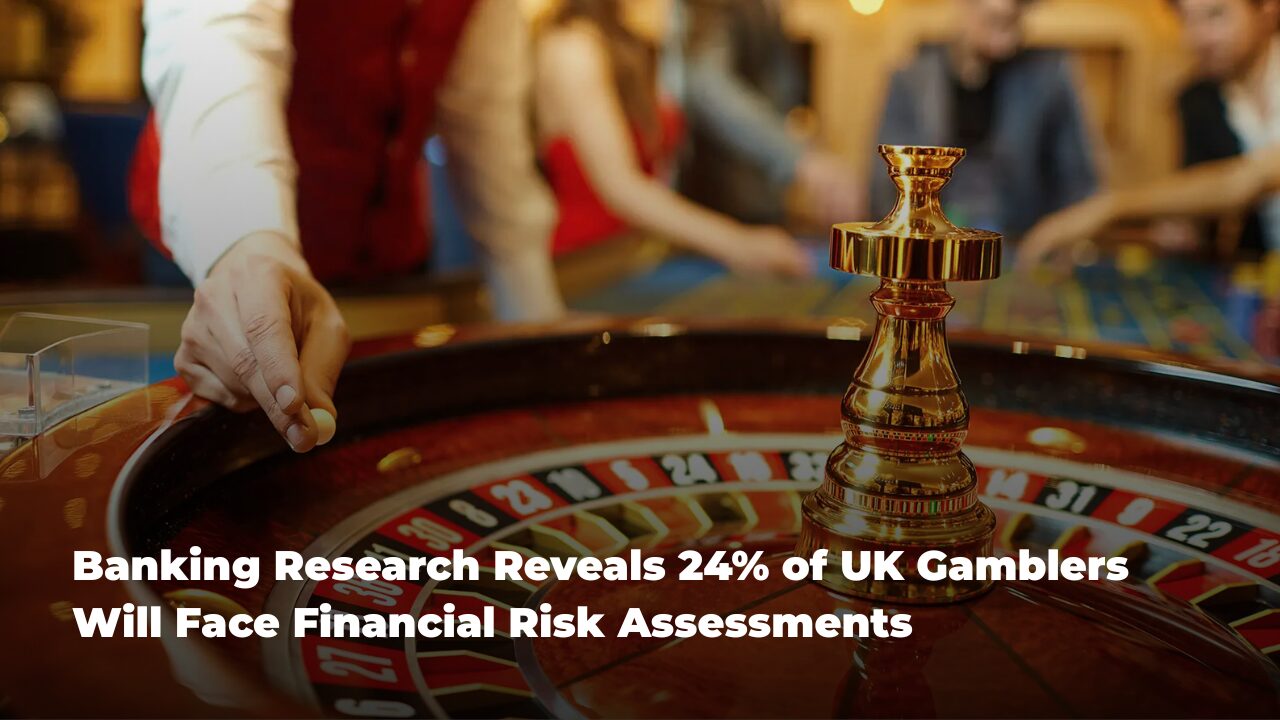
UK open banking data shows one in four online gamblers will activate financial risk assessments. The Gambling Commission requires these checks starting in February 2025. This finding demonstrates implementation challenges for the new regulation. ScienceDirect published the research examining 243,478 UK gamblers’ bank transactions. Operators must perform “light-touch” checks when customers lose over £150. This applies to any 30-day period with a single operator. Researchers couldn’t see gambling account balances in the data.
Net deposits served as the loss indicator for the study. This calculation subtracts withdrawals from money paid into accounts. Calendar-month analysis showed 57,592 people exceeded the £150 threshold. These Exceeding Threshold Gamblers (ETGs) represent 23.8% of the sample. ETGs crossed the limit during four separate months, typically. Their average excess reached £291 each time they breached the threshold. Multiple operator usage was common among ETGs in the research. They exceeded thresholds with two brands on average. ETGs generated 92% of total gambling expenditure despite being the minority.
The ETG group spent £405.8m of the £439.3m total recorded. Annual mean gambling expenditure reached £1,804 per person overall. The median was £108, showing highly uneven spending patterns. Gambling represented 17% of leisure spending across the sample. It accounted for 7% of estimated income on average. Males dominated the sample with even stronger representation among ETGs. Men comprised 73.2% of ETGs versus 60% of non-ETGs. ETGs were slightly older, with more 30-39-year-olds.
ETGs Fall into Distinct Behavioural Categories
Cluster analysis revealed three ETG profiles in the data. “Diversified” ETGs made up 56% of the threshold-exceeding group. Their gambling averaged 7% of income with moderate intensity. “Engaged” ETGs represented 41% and gambled more intensively overall. Gambling equaled 37% of their income and 75% of their leisure spending. The “Highly Engaged” cluster contained just 4% of ETGs. This small group spent 93% of its leisure funds on gambling activities. Aggregating all operators increased the threshold-exceeding share to 25%. Per-operator frameworks might miss customers spreading activity across multiple brands.
The UK gambling sector faces comprehensive regulatory changes during this period. New affordability checks, revised bonuses, online slot limits, and higher taxes arrive soon. These measures create the biggest regulatory shift in over ten years. Companies must now demonstrate stronger harm-prevention controls to regulators. Industry groups warn these changes might push customers to unlicensed sites. Offshore operators lack the safeguards that UK-licensed companies must provide. Recent research supports concerns about black market growth from restrictions. Tighter rules may force gamblers outside the UK’s regulatory boundaries. This could reduce protection for vulnerable players seeking gambling services.
Explore more:
 Share
Share


 236 views







 Analysis
  Blog
Blog  Business
  Companies
  Crime
Crime  Finance
  M&A
M&A  Regulation
  Reports