Key Points
- Labor’s Gambling Reform Bill stops short of a full advertising ban but introduces sweeping restrictions on how operators promote their services.
- Legal experts predict greater consolidation among Australian betting operators as compliance costs climb.
- The bill faces fierce opposition from multiple political factions, with the Labor conference becoming the latest arena for the gambling debate.
Labor’s Gambling Reform Bill Lands at a Politically Charged Moment
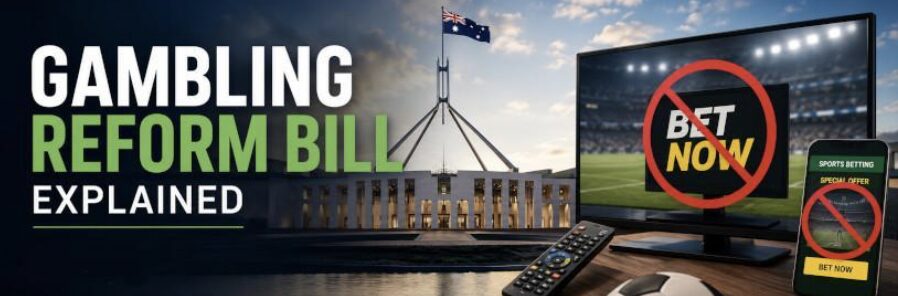
Australia’s betting industry is staring down its most consequential regulatory shift in recent memory. The Gambling Reform Bill, introduced by Prime Minister Anthony Albanese’s Labor government this month, covers advertising restrictions, self-exclusion enhancements, foreign lottery prohibitions, and illegal gambling enforcement in a single legislative sweep. The timing could not be more charged. Labor’s annual conference, running 23 to 25 July in Adelaide, dropped the bill into the middle of an immediate political pressure test.
Backbench MPs, Greens senators, independent crossbenchers, and rank-and-file members all turned up to Adelaide with the same message: go further. Many want considerably more than what Albanese has tabled. Operators, however, should not confuse the political noise for a soft piece of legislation. Addressing the scope of the reforms on SBC’s iGaming Daily podcast, Jamie Nettleton, partner at Australian law firm Addisons Lawyers, was direct: “It’s going to have very considerable ramifications in the way in which licensed operators in Australia currently do business. The more you get into it the greater the restrictions in place.”
Four Pillars the Gambling Reform Bill Actually Rests On
Labor’s bill does not have a single headline measure. It sits on four distinct areas of intervention, each carrying its own weight. The advertising provisions are the most visible. Gambling companies are barred from using notable persons and influencers in their campaigns, odds-based promotions are out, and branding on sports uniforms and at venues is being phased away.
Communications and Sport Minister Anika Wells confirmed the influencer provisions are broader than many in the industry expected. Speaking as reported by ABC News, Wells said: “It doesn’t matter how many followers they have or which platform they use, under this law a gambling company cannot enter into an arrangement with an influencer to promote gambling to their followers.” Defending the wider scope, she added: “People are seeing too many ads, particularly during children and family programmes and live sport events.”
The second pillar takes aim at illegal gambling. ISPs and financial institutions now carry new obligations, handing enforcement agencies tools they have not had before against offshore operators who have been targeting Australian consumers for years without consequence. In 2025, a study funded by Responsible Wagering Australia estimated that the size of the illegal offshore market had reached AU$10.9 billion, almost doubling from the size of the market in 2019.
The BetStop, which is the self-exclusion register introduced in August 2023 modeled after the UK’s GamStop, takes pride of place in the third pillar. The bill commits to strengthening that framework. Research from the Grattan Institute confirms that by mid-2024 roughly 22,000 Australians had registered with BetStop, with half of them under 30. The fourth and final pillar introduces a complete ban on keno-style lottery games and foreign matched lotteries, the latter being draws whose outcomes depend on a result from outside Australia.
The Advertising Fight That Has Been Brewing for Three Years
No policy document has cast a longer shadow over this debate than the Murphy Report. The parliamentary inquiry, led by the late Labor MP Peta Murphy, handed down 31 recommendations in 2023, with a phased, complete ban on gambling advertising as its central task. Labor did not deliver that.
The government’s own Office of Impact Analysis, which published its findings in April 2026, put the effect of the partial restrictions at roughly $62.7 million in reduced annual gambling spending, or 0.8%. A full ban, the same report acknowledged, would have produced “a higher net benefit” but would also impose “a significant financial burden on industry which would impact Australia’s grassroots sport and media industry.”
Broadcaster revenue sits at the core of why a full ban proved politically impossible. The Nine Network, which carries both AFL and NRL coverage, counts gambling advertising as a significant income stream. Critics have not forgiven Albanese for what they see as a straight trade: broadcaster protection over public health. According to the Grattan Institute, Australians lose approximately $36 billion a year on legal forms of gambling, giving the country the highest per capita gambling losses on the planet.
Operators Are Looking at a Compliance Wall, Not Just Ad Rules
Advertising is not the only pressure landing on Australian operators right now. The restrictions run deeper. Nettleton spelled out the direction without ambiguity: “They range from very considerable restrictions on the manner in which betting operators can promote their services in Australia, and a lot of the expansion that occurs as a result of the opening up of a market, which we saw in Australia initially and now see in the US, is going to be closed considerably with very limited amounts of advertising.”
The compliance weight carries a consequence that most coverage has underplayed. As the AFR reported, Labor’s rank and file have already united to push for a tougher line on inducements, a sign that compliance expectations will only grow. Nettleton’s assessment of where the market is heading was equally pointed: “At the end of the day, the real question will be ‘to what extent is there a benefit to having a licence in Australia that allows you to promote your services?'” His conclusion on where this leads: “I think the long-term result of this, particularly because of the added level of compliance, is that there will be greater consolidation, there will be fewer and lesser operators and a much greater barrier to entry for others.”
Australia’s dominant trio of Sportsbet, a Flutter Entertainment brand, Tabcorp, and Entain Australia, which runs Ladbrokes and Neds, are best placed to absorb what is coming. Smaller operators will not find the maths as forgiving. Compliance costs that are manageable for the big three become existential for mid-tier and boutique books, and the consolidation Nettleton is predicting may well be already underway.
No Comfort for the Government in Adelaide
Adelaide was not kind to the Albanese government this week. Critics came from every direction. Nine’s report from the conference indicates that the independent senator and ex-Australian rugby union player, David Pocock, went on the attack against the government directly on July 21, 2026, writing that the Labor Party “continues to take donations from gambling companies while not acting on inducements or fully banning gambling ads.”
Conference delegates voted unanimously to amend Labor’s national platform to acknowledge the harm gambling inducements cause and to commit to stronger measures. That vote was the most concrete outcome of the gambling debate in Adelaide. Speaking at the conference, Unions NSW secretary Mark Morey delivered one of the sharper lines of the week: “Gambling is a tax on working people, and at this point, online gambling is regulated by three guys in a tin shed in the Northern Territory.” Tim Costello of the Alliance for Gambling Reform, speaking at the same event, was equally direct on the absence of a national regulator: “The prime minister seems to want us to believe that the de facto regulator, the Northern Territory Racing Commission, is doing a great job. They hadn’t even filed a report for 31 years.”
Even the unanimous platform vote failed to satisfy. Pocock said the final document “still falls far short of what Labor’s own committee recommended in the final Murphy Report, including a complete phased-in ban on gambling ads, a national regulator and ending inducements.”
While the Liberal-National Coalition took a more cooperative stance, rather than an opposing one, to that taken by the Greens and the independents, Jane Hume, deputy leader of the Liberals, stated during a discussion with the ABC: “We all agree that gambling addiction is taking an enormous toll on so many Australian families, and we want to make sure that the new laws actually get this right.” Murray Watt MP, the Environment and Water Minister, held the government’s position: “There’ll be people who’ll say a range of things around these issues, but the government has taken serious action already. We’ve got our legislation before the parliament outlining where we want to take gambling reform, that’s the biggest focus and we think it will make a big difference.”

Expert Analysis
Nobody walks away from this bill satisfied. Operators get no real relief from a partial advertising reprieve when the compliance structure beneath it is this demanding. Advocates get no real win from a bill that has not implemented a single Murphy recommendation after three years of political manoeuvring. What the legislation does deliver is a permanent shift in what it costs to operate in Australia. Nettleton’s consolidation forecast deserves serious attention. A market where compliance is expensive, promotional reach is shrinking, and political pressure is building from the Greens, independents, and Labor’s own backbench is not a market that accommodates twenty operators. The Senate inquiry reports in August, and that report, not any speech from Adelaide, will define the next phase of this fight.
 Share
Share


 148 views