

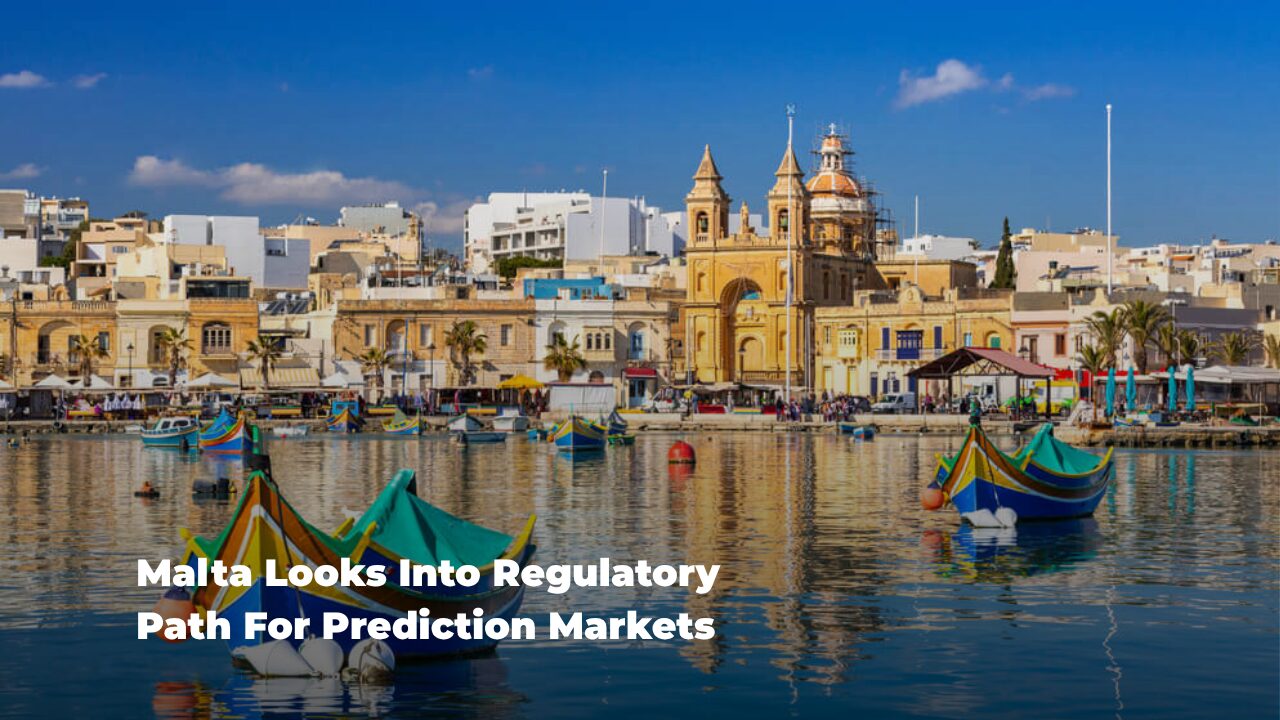
Malta is considering a dedicated regulatory framework for prediction markets. Economy Minister Silvio Schembri described the vertical as a major opportunity for the country’s digital economy.
The announcement was made during the inauguration of Blockchain.com’s new offices in Malta.
Schembri said: “We are actively exploring the emerging field of prediction markets, an area experiencing rapid global momentum which presents significant opportunities for innovation, provided it is supported by a clear, forward-looking legislative framework that enables it to develop responsibly and at scale.”
The move places Malta among the first jurisdictions to openly consider a specific system for prediction markets.
Growth in volumes draws global regulatory attention
Prediction markets have expanded rapidly, attracting interest from users and regulators. Platforms such as Polymarket and Kalshi reportedly handled more than $40bn in combined volume by the end of 2025.
Kalshi’s monthly volume sits around $1bn as at last September. Governments are now trying to determine whether these markets should be classified as financial instruments, gambling products, or a hybrid of both.
Fragmented legal landscape creates uncertainty
Regulatory treatment of prediction markets varies widely across jurisdictions. In the United States, guidance from the Commodity Futures Trading Commission has been accompanied by legal disputes in states such as Nevada and Arizona.
Within the European Union, there is no unified framework comparable to existing crypto regulations such as MiCA. Member states have taken different positions, with some restricting access to major platforms.
This lack of alignment shapes how companies approach expansion and compliance across regions, and mirrors a broader global shift toward tighter oversight, licensing and compliance standards, as explored in the Global Gaming Regulation Guide.
Proposed framework focuses on integrity and protection
Malta’s proposed framework could offer one of the first structured entry points for prediction market operators. The focus is expected to include market integrity, consumer protection and financial stability.
Key areas under consideration include controls around insider trading, safeguards against manipulation and clear rules on payouts. The framework may also address responsible trading measures and capital requirements for operators.
The government’s position reflects that growth is more sustainable when users trust that platforms operate under clear rules and consistent supervision.
Further updates on this topic will be available in the regulation section.
Explore more:
 Share
Share


 17 views








 Analysis
  Business
  Companies
  Crime
Crime  Finance
  M&A
M&A  Prediction Markets
  Regulation
  Reports