

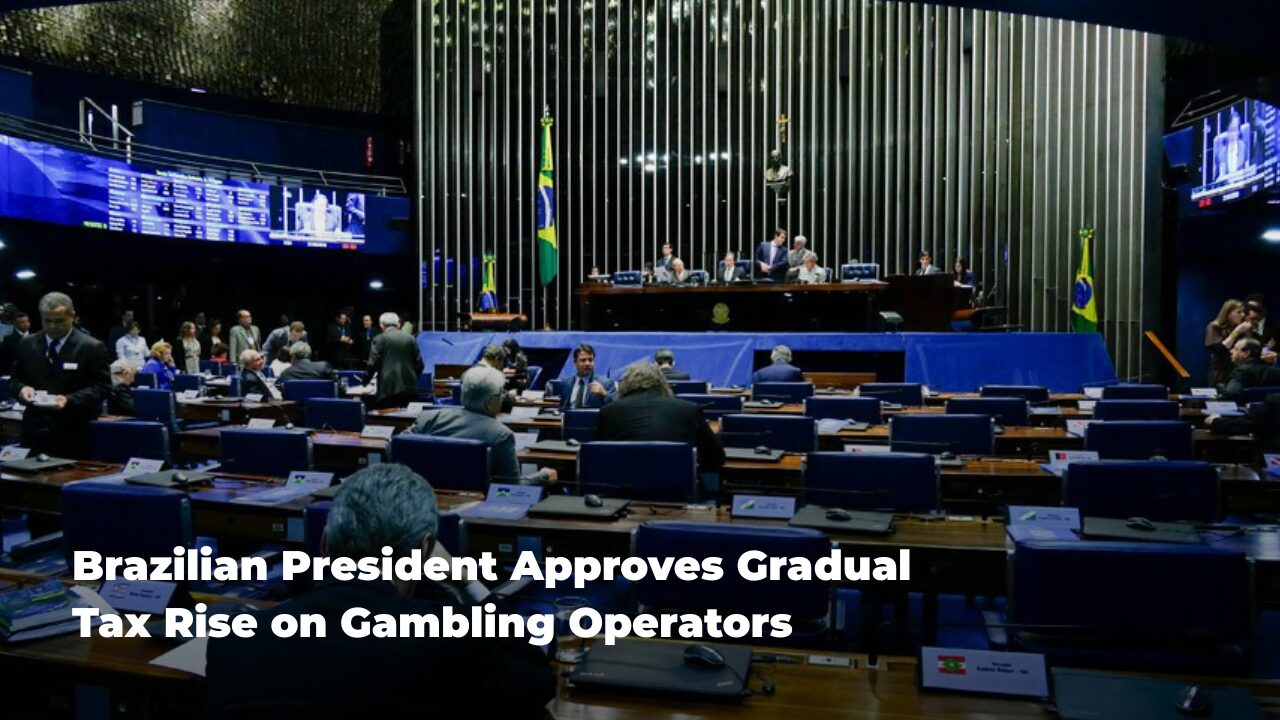
Operators will see a step-by-step rise in tax which will reach 13% in 2026, 14% in 2027 and 15% in 2028.
Brazilian gambling sector is now preparing for higher taxes in the coming years, and this decision brings mixed reactions across the market. A new law approved by President Luiz Inácio Lula da Silva increases tax rates on licensed gambling operators in a gradual structure. By the year 2028, the final tax level will reach 15% under the approved legislation. Final approval for Complementary Law No. 224 was granted by President Lula last week of December after formal review. This decision came once the Senate and the Chamber of Deputies accepted PLP 128/2025 in mid-December. Following this step, the law officially entered force within the legal system. Under Complementary Law No. 224, federal tax benefits for multiple sectors drop by 10% as part of fiscal changes. Within this framework, gambling licensees will face rising tax rates over a defined timeline.
At present, gambling operators pay a 12% tax based on gross gaming revenue. The new law sets the tax rate at 13% starting in 2026. Another increase will push the rate to 14% in 2027 under the same policy. From 2028 onwards, the tax rate will remain fixed at 15%. Additional provisions in the law control how part of the collected revenue must be allocated. From 2026, gambling companies must send 1% of revenue into Brazil’s social security system. This share increases to 2% in 2027 and then moves to 3% in 2028. The purpose of these payments is to support public services through dedicated funding. Complementary Law No. 224 also introduces joint tax liability as a new enforcement tool. This rule allows authorities to hold supporting companies responsible for unpaid taxes linked to illegal betting. It applies to advertising entities and financial or payment companies connected with unlicensed gambling operators.
Although approval happened before 2025’s end, the law will not apply in full immediately. The Brazilian constitution states that new or increased taxes require a 90-day waiting period after publication. Due to this requirement, gambling operators will receive a short delay before the 13% tax begins in 2026.
Player Deposits Tax Adds Another Risk in Brazil
The final tax rate of 15% stands lower than an earlier proposal discussed inside the Senate, which brought some relief and cautious reaction. During early December, the Senate Economic Affairs Committee approved PL 5,473/2025, suggesting that gambling operators face an 18% tax rate by 2028. Later, the government chose to support PLP 128/2025 instead, signalling a shift in approach within the legislative process. This decision followed attempts by some lawmakers to return PL 5,473/2025 to the full Senate for additional review. Such action caused delays and reduced the chance for the bill to pass before the government recessed later in December. Although the 15% rate appears as a limited positive outcome for licensed gambling operators, strong concern remains across the industry. Many companies now fear the introduction of a new tax on player deposits, which raises uncertainty.
Last month, the Senate plenary approved a bill that sets a 15% tax on player deposits made on licensed gambling platforms. Because changes occurred during the process, the bill must return to the Chamber of Deputies for further review. At that stage, lawmakers will carry out more analysis before sending it to the president for final approval. Funds collected from this tax, named CIDE-Bets, will move directly to the National Public Security Fund. The government expects CIDE-Bets to generate around BRL30 billion, equal to $5.5 billion, each year. Meanwhile, the Antifaction Bill restored the RERCT Litígio Zero Bets mechanism, reviving earlier tax obligations. This mechanism requires gambling operators to pay a 15% retrospective tax covering activities from 2018 to 2024. The rule applies to the period before the gambling market gained full regulation on 1 January 2025. Udo Seckelmann, head of gambling and crypto at Bichara e Motta Advogados, issued a warning on potential market impact.
He stated that the CIDE-Bets tax could reduce player use of licensed platforms. According to him, this situation could push channelisation below 20%.
Explore more:
 Share
Share


 170 views







 Analysis
  Blog
Blog  Business
  Companies
  Crime
Crime  Finance
  M&A
M&A  Regulation
  Reports