
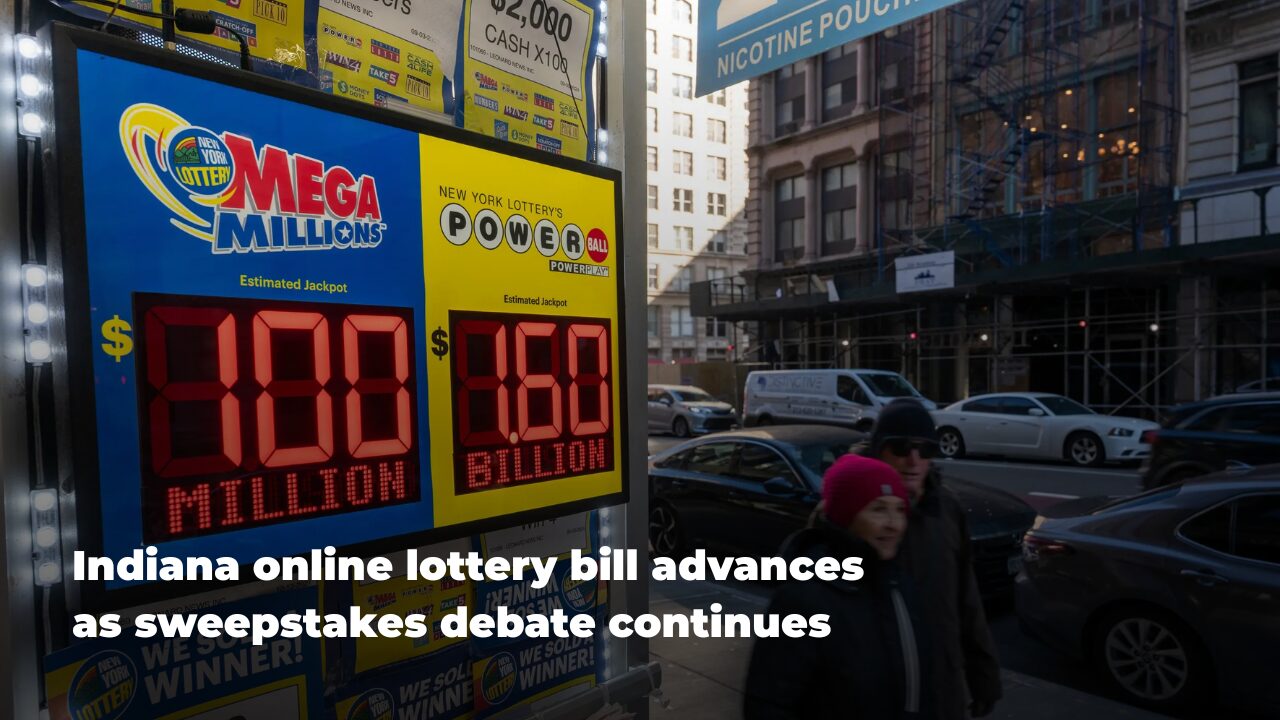
An Indiana House committee has taken a step toward allowing people to buy lottery tickets online. On Tuesday, 6 January, the House Public Policy Committee voted 9 to 3 to move House Bill 1078 forward. If passed, the Hoosier Lottery would be able to sell games like Powerball and Mega Millions on the internet.
Lottery officials say ticket sales have stopped growing and have stayed around $1.7 billion a year for about five years. The Indiana Capital Chronicle reported that online sales would not start until at least summer 2027 so the lottery can set up safety checks to make sure players are 18 or older and inside Indiana.
Money impact and limits
A report by the Legislative Services Agency says that online lottery sales could add between $314 million and $629 million in new revenue by the third year. This could increase yearly profits by $31 million to $94 million, compared to the $340 million the lottery made in the 2025 budget year.
More than a dozen states already allow people to buy lottery tickets online. These include Kentucky, Michigan, New York and North Carolina.
However, the Indiana bill still keeps the ban on lottery courier services that was passed last year. These are companies that buy lottery tickets for players.
Pushback over online casino games
Not all lawmakers agree with the lottery bill. Some say it makes no sense to allow online lottery sales while still banning online casino gambling. They tried to pass a bill last year that would allow them, but it did not reach a full vote in the House.
Those against online casinos are worried that it could reduce visits to physical casinos and increase gambling problems.
Sweepstakes ban divides lawmakers
At the same meeting, lawmakers talked about another bill that would ban online sweepstakes games that look like casino slots, poker, table games, lottery games, bingo and sports betting. Supporters say these games are in a legal grey area. Regulators explained that sweepstakes are not clearly covered by state law, so the Indiana Gaming Commission cannot properly control or monitor them.
Sean Ostrow of the Social Gaming Leadership Alliance said about 200,000 people in Indiana use these platforms. Committee chair Rep. Ethan Manning said this shows that people do not have enough legal options, describing the market as “black or grey depending on perspective”.
Manning supports legal online casino gaming and is backing House Bill 1052, which includes the sweepstakes ban. He believes allowing legal iGaming would reduce the need for sweepstakes sites. Operators of these platforms say they should be regulated and taxed instead of banned. The committee has not yet voted on the bill.
 Share
Share


 46 views







 Analysis
  Blog
Blog  Business
  Companies
  Crime
Crime  Finance
  M&A
M&A  Regulation
  Reports
  Community
 About us
 Privacy Policy
 T&C
T&C